Catch the Invisible -part 1
May 18 – July 20, 2024
Ana Beatriz Almeida, Jelili Atiku, Elolo Bosoka, Serigne Mbaye Camara,
Ibiye Camp, Tessi Kodjovi, Marica Kure, Alberto Pitta, A. Sika and Yadichinma Ukoha-Kalu
Yadichinma Ukoha-Kalu focuses on explorations of line, form, and boundaries, which she expresses through various media including painting, drawing, sculpture, and film. She often recreates landscapes on paper and, more recently, uses fabrics to combine abstract elements and textures. In her series Birthscapes (2021–present), Ukoha-Kalu examines words often stereotypically associated with femininity such as nurturing, gentle, affectionate, warm, empathetic, tender, smooth, and curved.
These words are conceptually rendered as forms using plexiglass of various sizes, colors, and shapes, suspended in layered arrangements in space to offer a new perspective on what femininity means. Alongside these sculptures, the artist will present her latest linocut prints exploring Igbo mythologies, developed during sessions at the Harmattan Workshop at the Onobrak Arts Centre, Agbarha-Otor, Delta State, Nigeria.
On the third floor gallery, Serigne Mbaye Camara captures the welcoming chants of young vendors to buyers in a new sound work that will be presented alongside abstract paintings and sculptures. Instead of calls to purchase goods, the voices evoke the names of respected Senegalese artists who have made significant contributions to the country’s art scene and beyond.
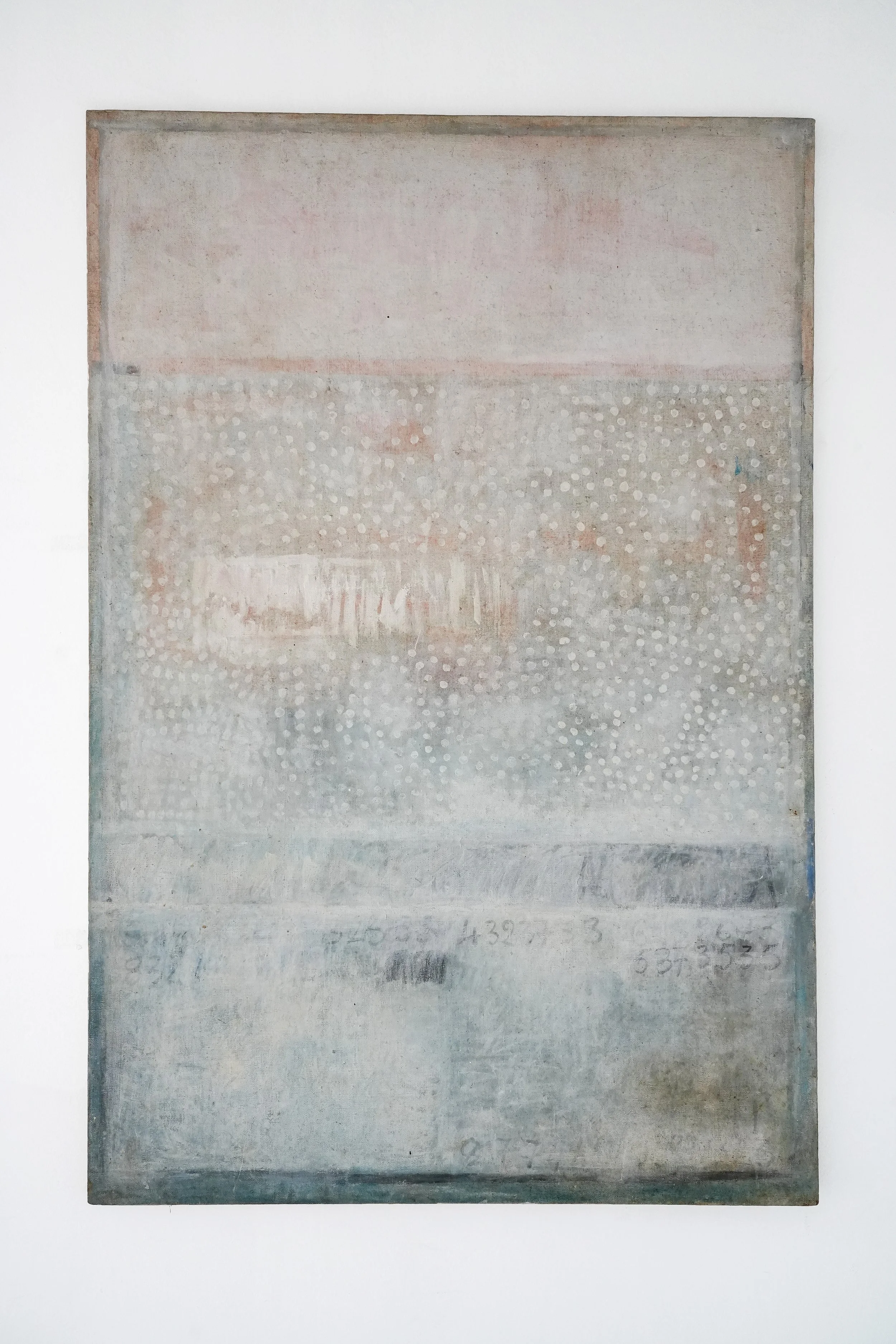
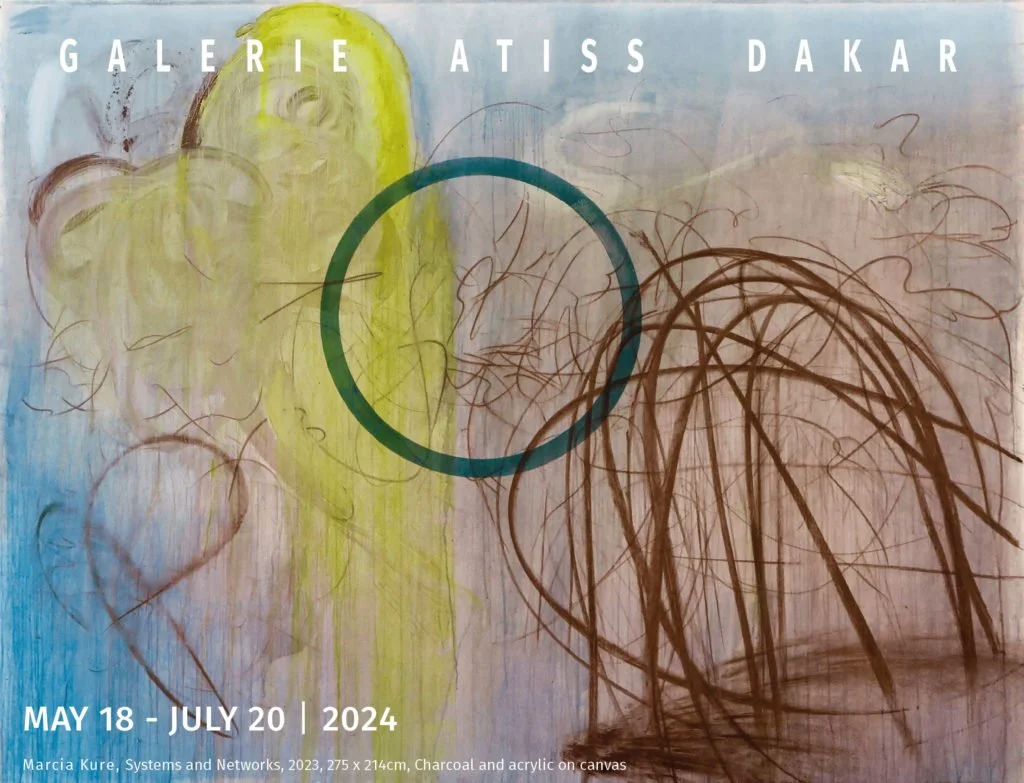
Sharing the space with Camara, Marcia Kure examines drawing from technical, conceptual, and material perspectives across several bodies of work. Informed by individual and collective experiences of postcolonial and diasporic identities, the origin and source of materials are central to Kure’s practice, which often incorporates line studies, plant-based natural pigments, and collage techniques. Through abstraction, Kure’s paintings in the exhibition question how visible and invisible structures can dissolve into line while reflecting on past, present, and emerging power systems.
In the former Aïssa Dione furniture factory, installations by Elolo Bosoka and Ibiye Camp probe material histories, reuse, and reinterpretation. Bosoka appropriates elements gathered from everyday urban environments for his installations, short films, drawings, soft “transparent” sculptures, and pictorial objects, engaging with notions of art as place, economic exchange, materiality, and history.
His new large-scale sculpture interacts with the industrial architecture of the old workshop, creating a living artwork that engages the viewer, space, and material. Accompanying this sculpture is a photographic series continuing the artist’s documentation of the unexpected beauty found in the geometry and form of everyday spatial encounters.
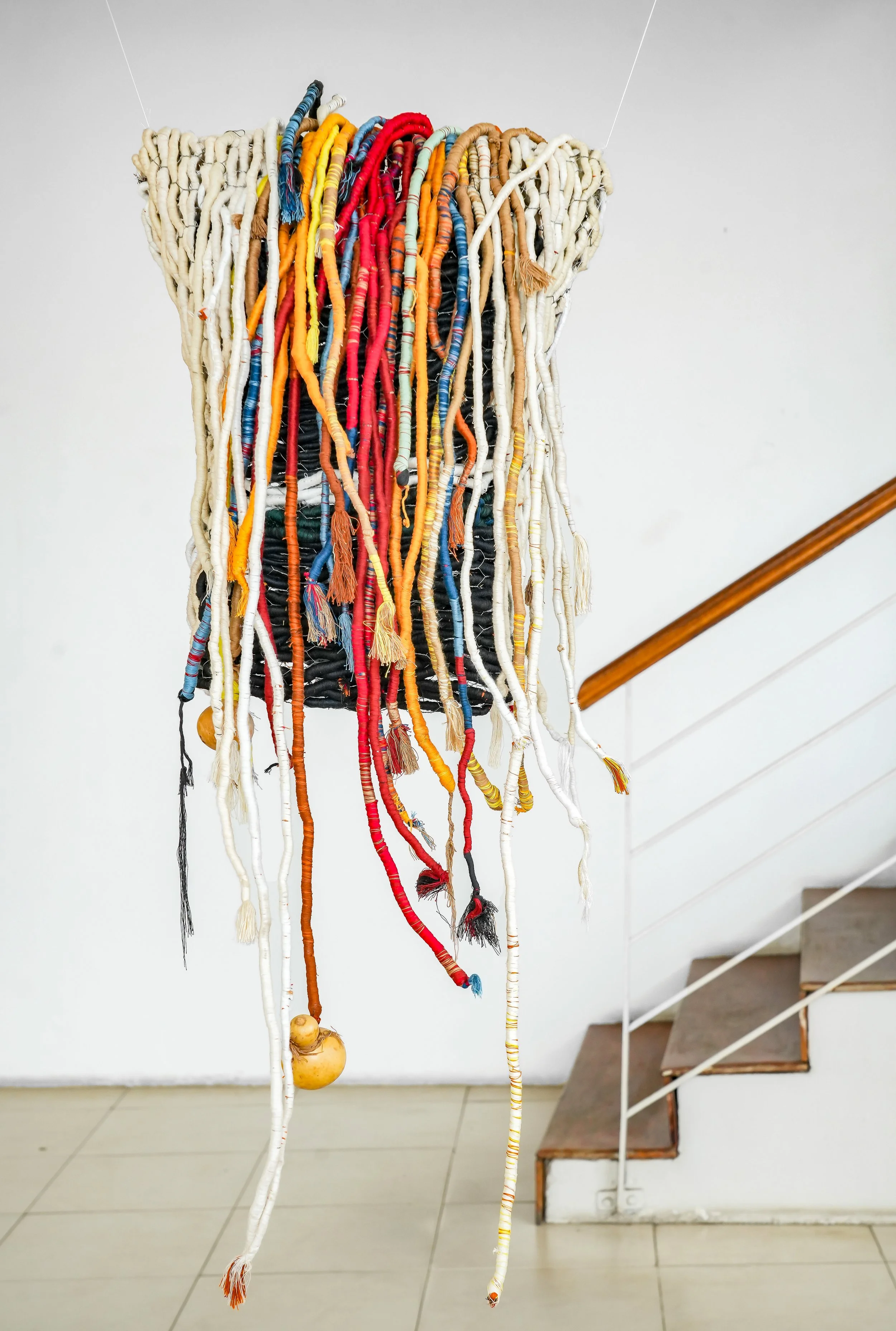
Ibiye Camp’s recent installation, Remaining Threads (2021–present), focuses on the impact of automation on our bodies. Camp uses Injiri fabric in this installation, derived from Madras cloth widely traded during the transatlantic slave trade. In Buguma, Nigeria, where part of her family is from, Kalabari women artisans traditionally created Injiri fabric by cutting and removing threads to make new patterns. This fabric was worn as wraps during Kalabari ceremonies.
However, the traditional creative role of women has been replaced in recent years by machines manufacturing the fabric in factories in China. This shift has had a significant impact on social roles and spaces in Buguma. In Remaining Threads, the sound of Kalabari drums conveys stories about goddesses, gods, and spiritual beings while also capturing the spectral traces and presences resulting from the transformation of the fabric’s production process.
Catch the Invisible brings together artists from Brazil, the United States, Europe, and West Africa concerned with material and immaterial explorations that offer new approaches to visual storytelling.
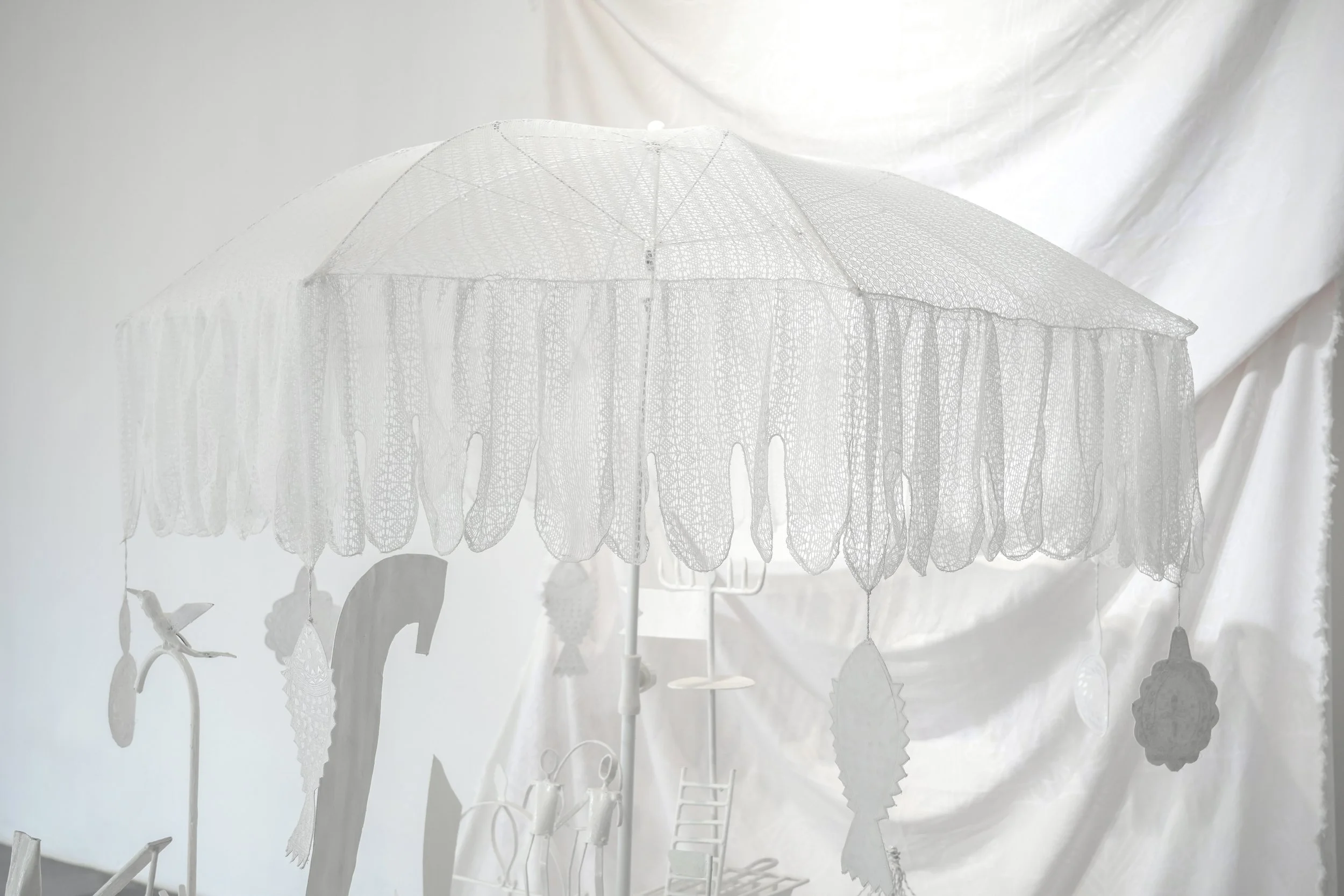
Galerie Atiss Dakar announces a two-part group exhibition as part of #theOFFisON. Spread across two locations – Galerie Atiss in Dakar-Médina and Atelier Aïssa Dione Tissus in Sodida, Dakar – the exhibition is anchored in a theme that connects the materiality, spirituality, and symbolism of Brazil and West Africa.
The title highlights the many forms of communication through gestures and meanings beyond canonized or indoctrinated language and the systems of power and control from which they emerge. Instead, it prioritizes knowledge passed down through generations, whether ancestral or exploring the context, landscape, and environment for what lies beyond the visible. New and existing artworks by an intergenerational group of artists compare physiologies, origins, and histories transmitted across generations while engaging with themes of collective memory, ancestry, spirituality, reuse, and reinterpretation.
Materials become essential in linking diverse practices and approaches that ultimately reveal parts of our human history that remain invisible. Forgotten or endangered ancestral and indigenous knowledge is laid bare in textiles, film, drawings, and an installation, combined with the capacity to envision new futures and imaginaries for artistic creation.
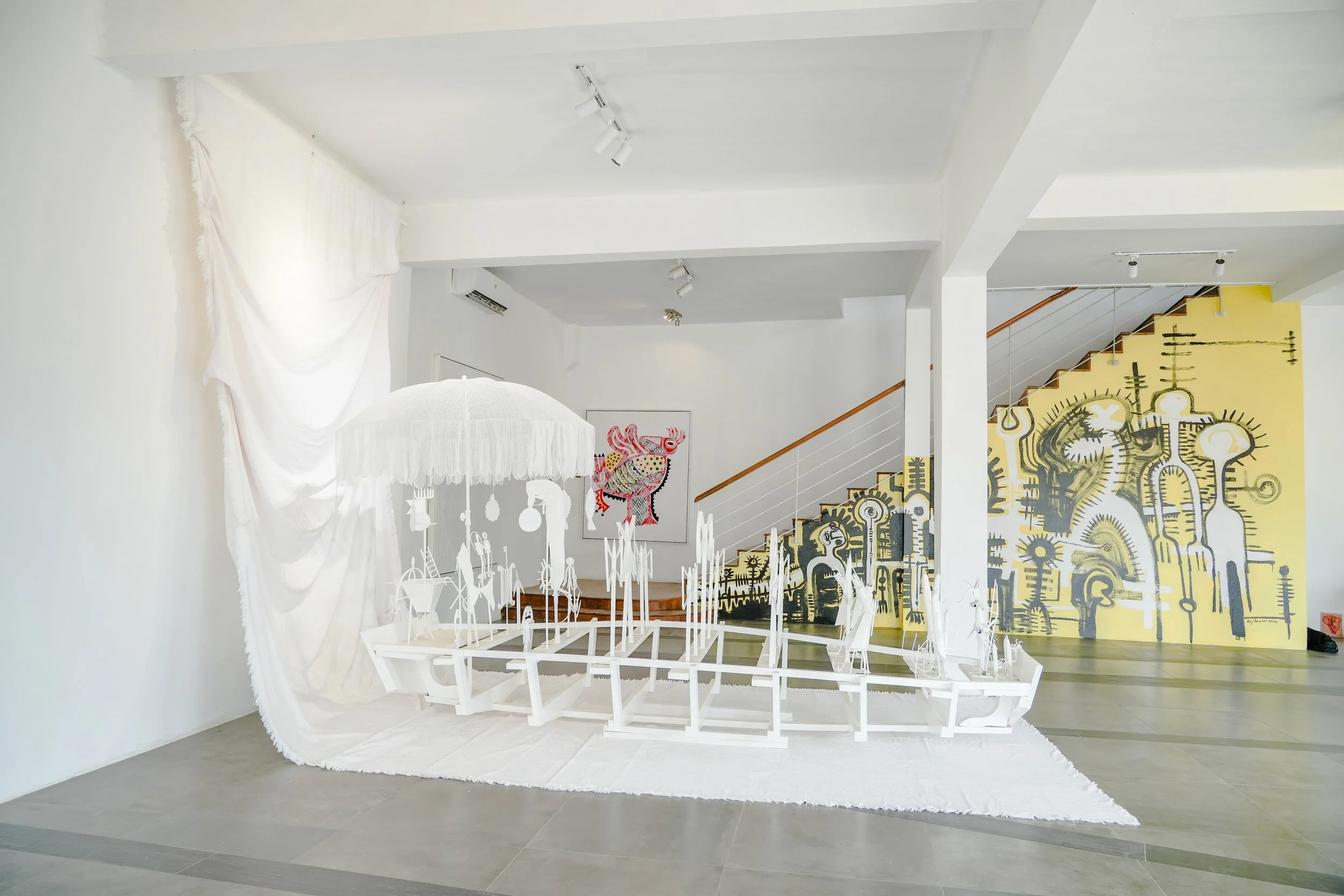
Alberto Pitta lives and works in Salvador, Brazil, where he grew up observing the activities of his mother, the Iyalorixá Mãe Santinha de Oyá. This inspired his interest in working with fabrics and their symbolism. On the gallery’s ground floor, Pitta presents a new large-scale in situ installation that connects Senegalese and Brazilian maritime histories in the form of a boat sculpture combining his pioneering work in fabric printing, clothing, sculpture, and the ornaments of the Orisha deities of the West African religion Candomblé. For more than 45 years, Pitta has pursued his research and creation of prints, costumes, sets, and allegories that characterize the visuality of the Afro blocks dominating Salvador’s carnival.
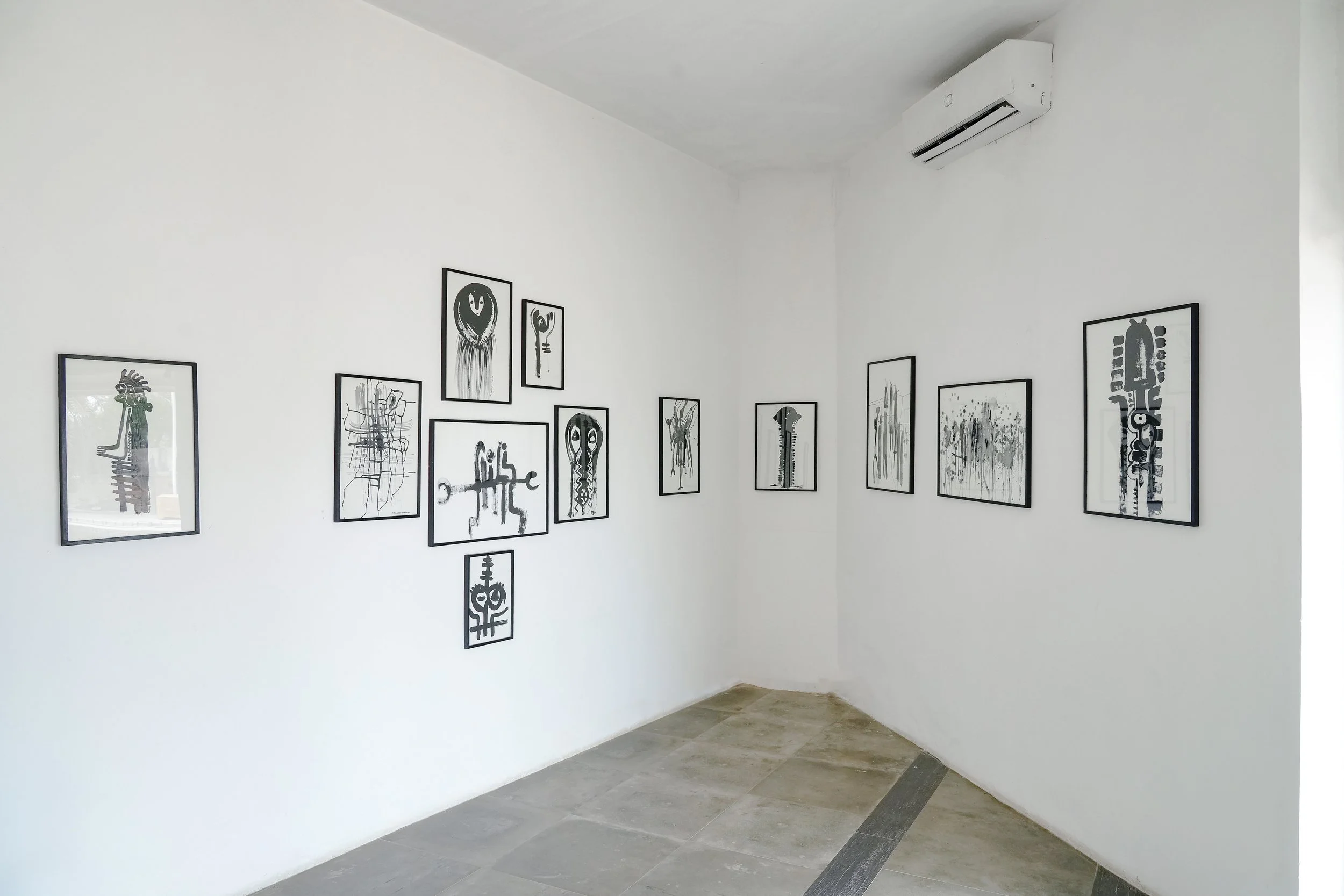
Jelili Atiku has expressed his political concerns for human rights and justice through various media such as drawing, sculptural installation, photography, video, and live performance art. He aims to broaden viewers’ horizons and help them understand the world around them so they can enrich their understanding and experiences and provoke change in their lives and environment. Atiku’s presentation will focus on his extensive but rarely exhibited drawing practice rooted in Yoruba symbolism.
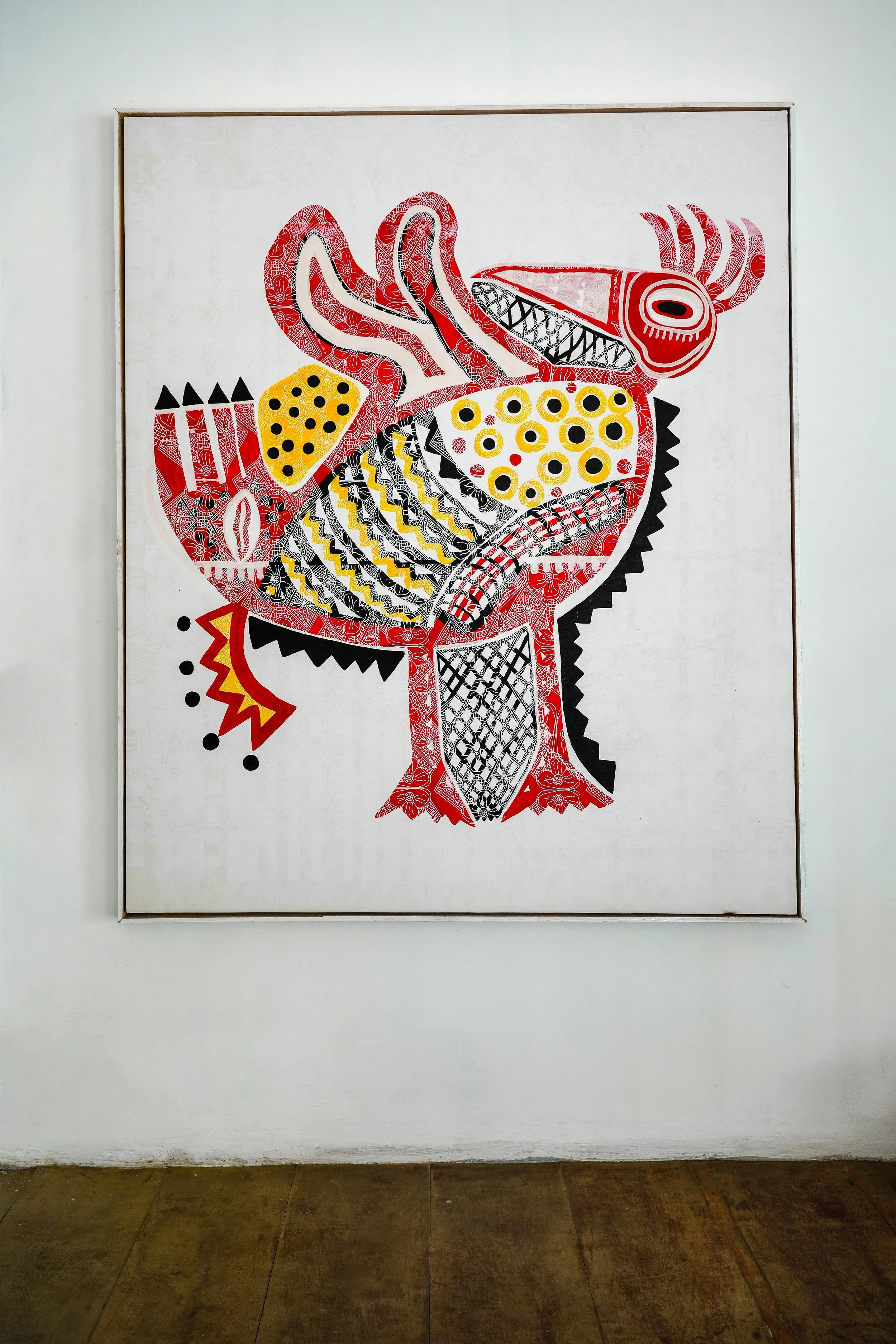
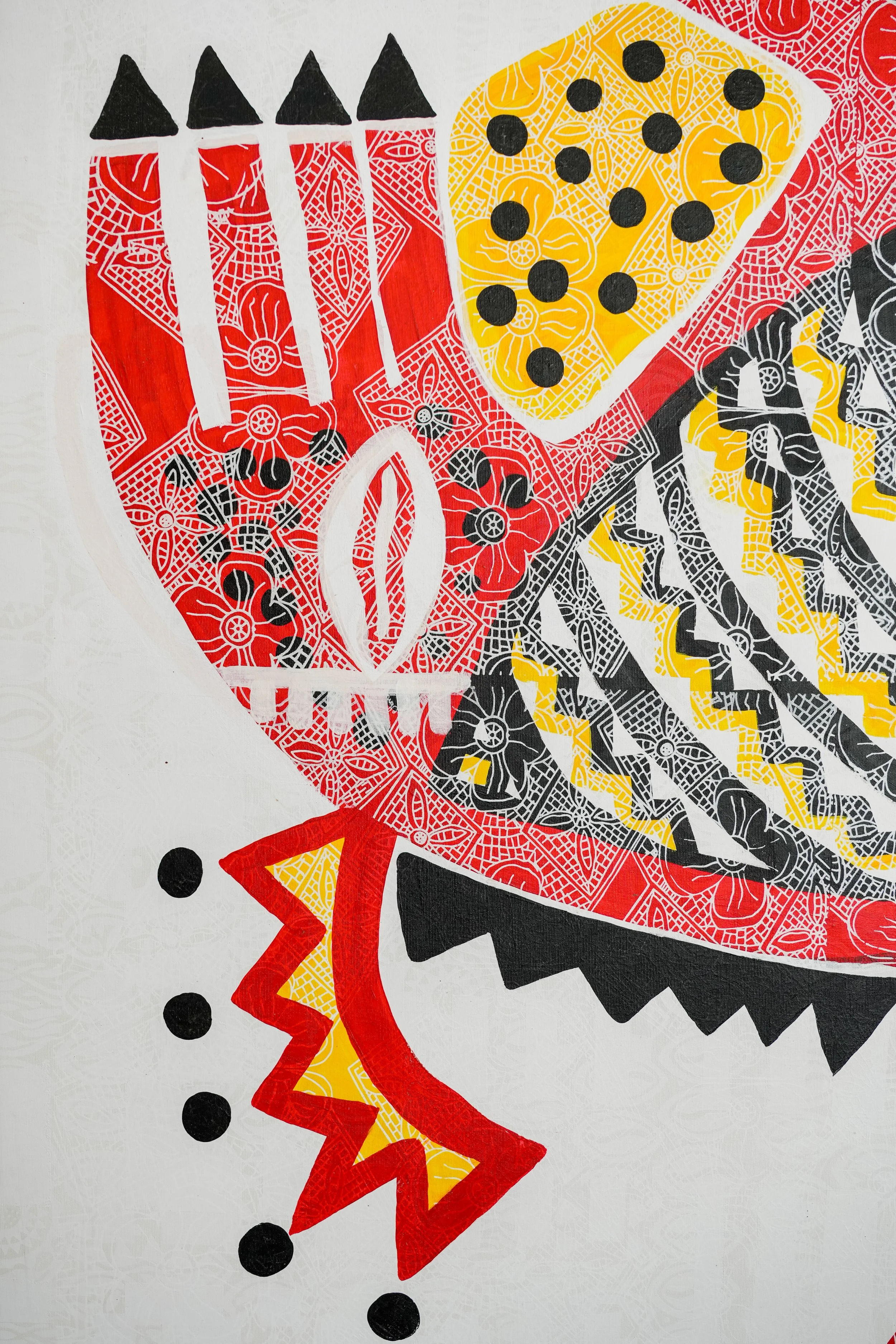
Like Atiku, A. Sika sometimes works with Yoruba symbolism and mythologies. She is a priestess of disorder, a free artist liberated not only in her artistic approach but also in how she perceives her relationship with her creations, drawn from her creative muses. With disarming lightness, she transcends established codes concerning standardized techniques. She has empowered herself to push boundaries, delve deep into her being, thus expanding her scope of action.
Ana Beatriz Almeida focuses on African traditions and their connections with the African diaspora throughout history. She developed a series of rites to honor those who did not survive the transatlantic slave trade but remain alive in spirit. Concentrating on memory, the meaning of life and death, and the infinity between the two, her installation Homey, a 10-year ritual performance documented through film, photography, and ephemeral works, was specially created for the gallery on the first floor.
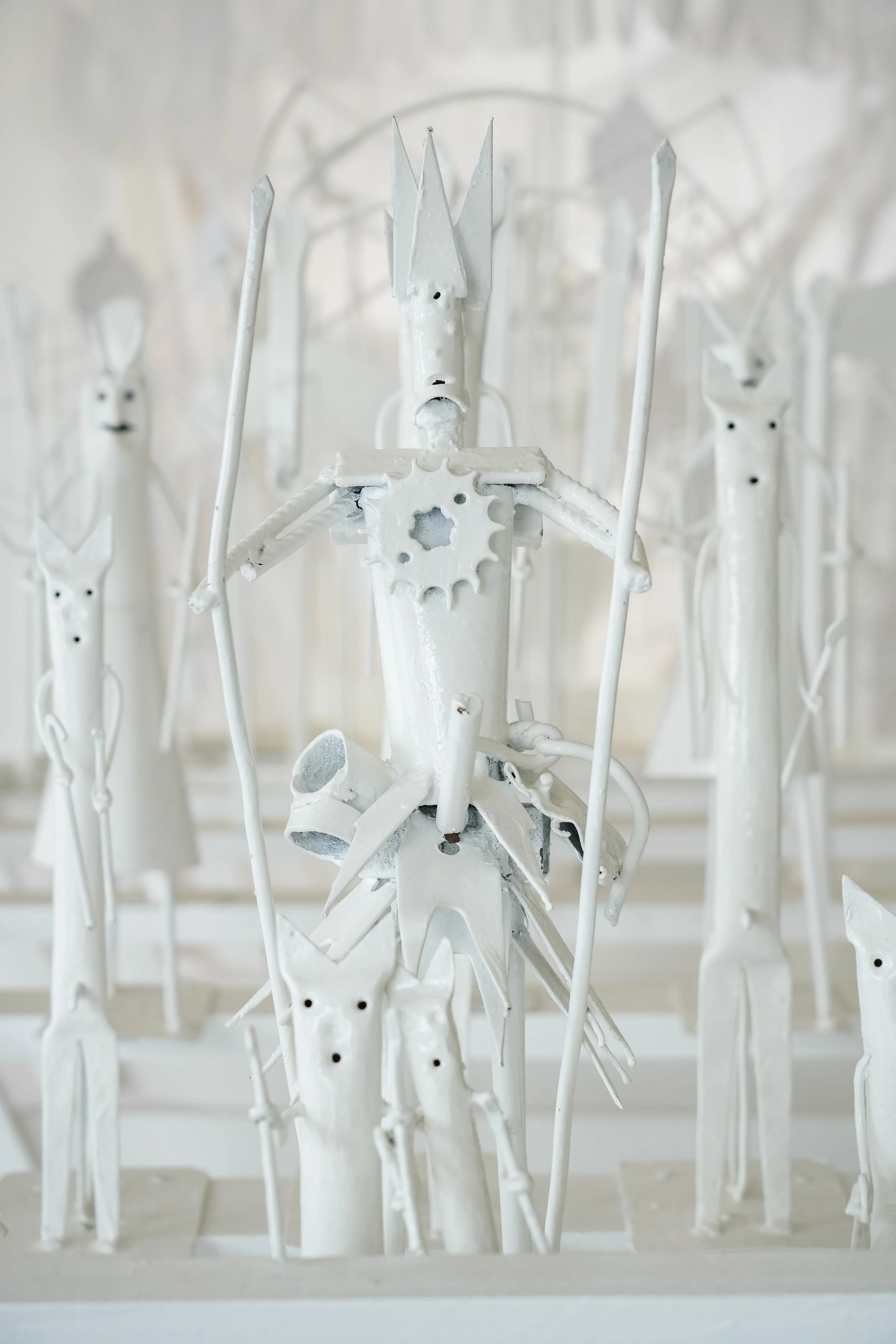
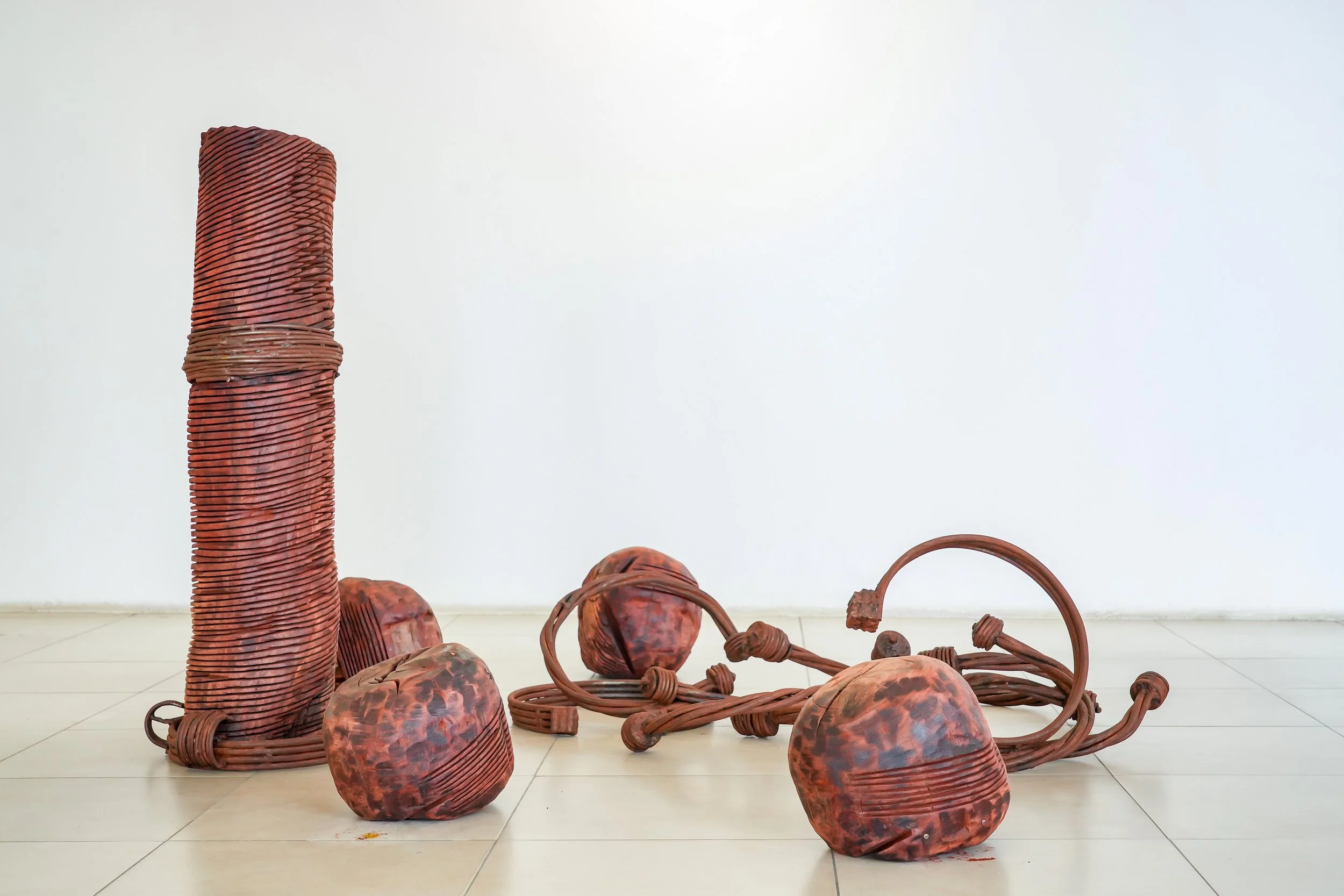
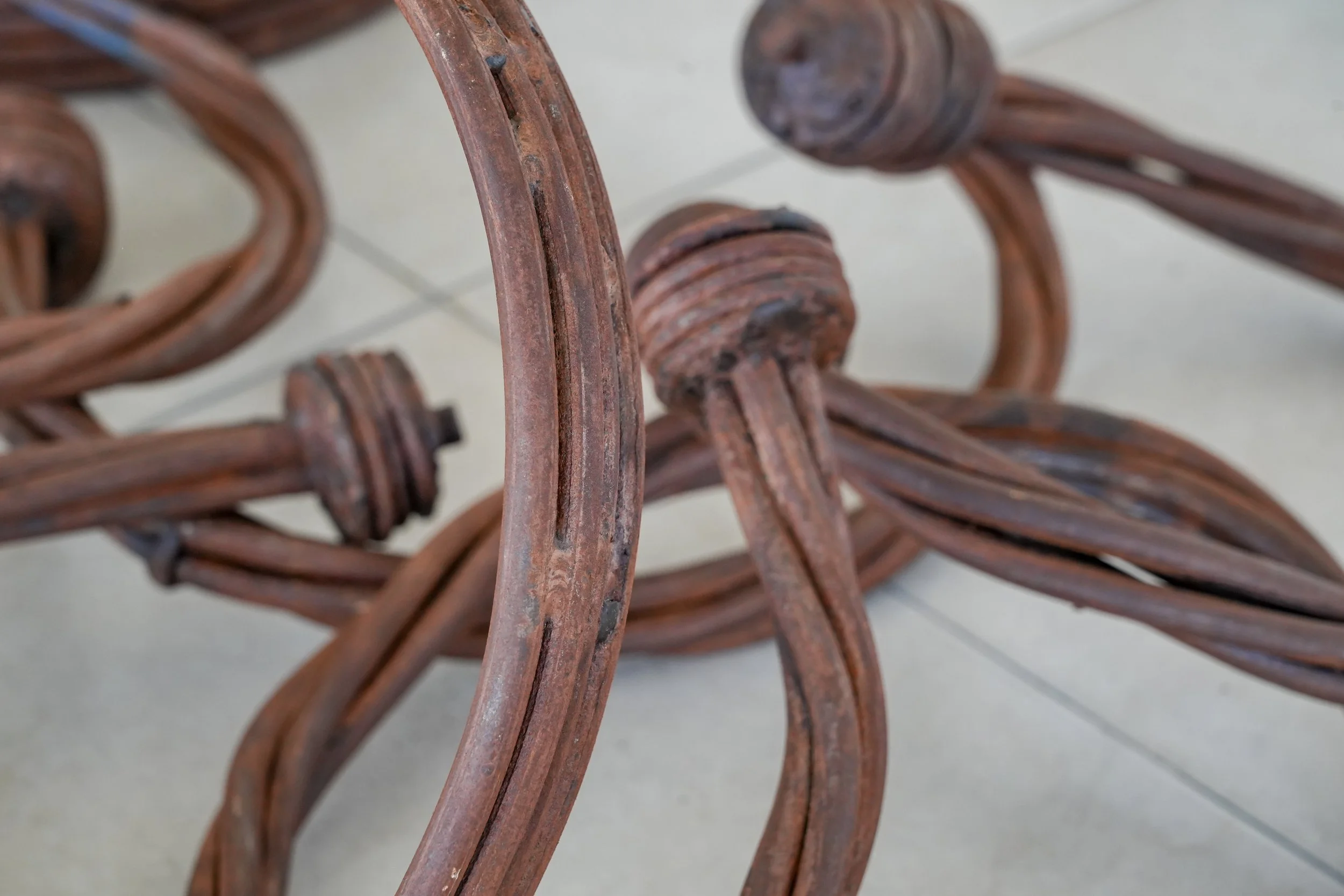
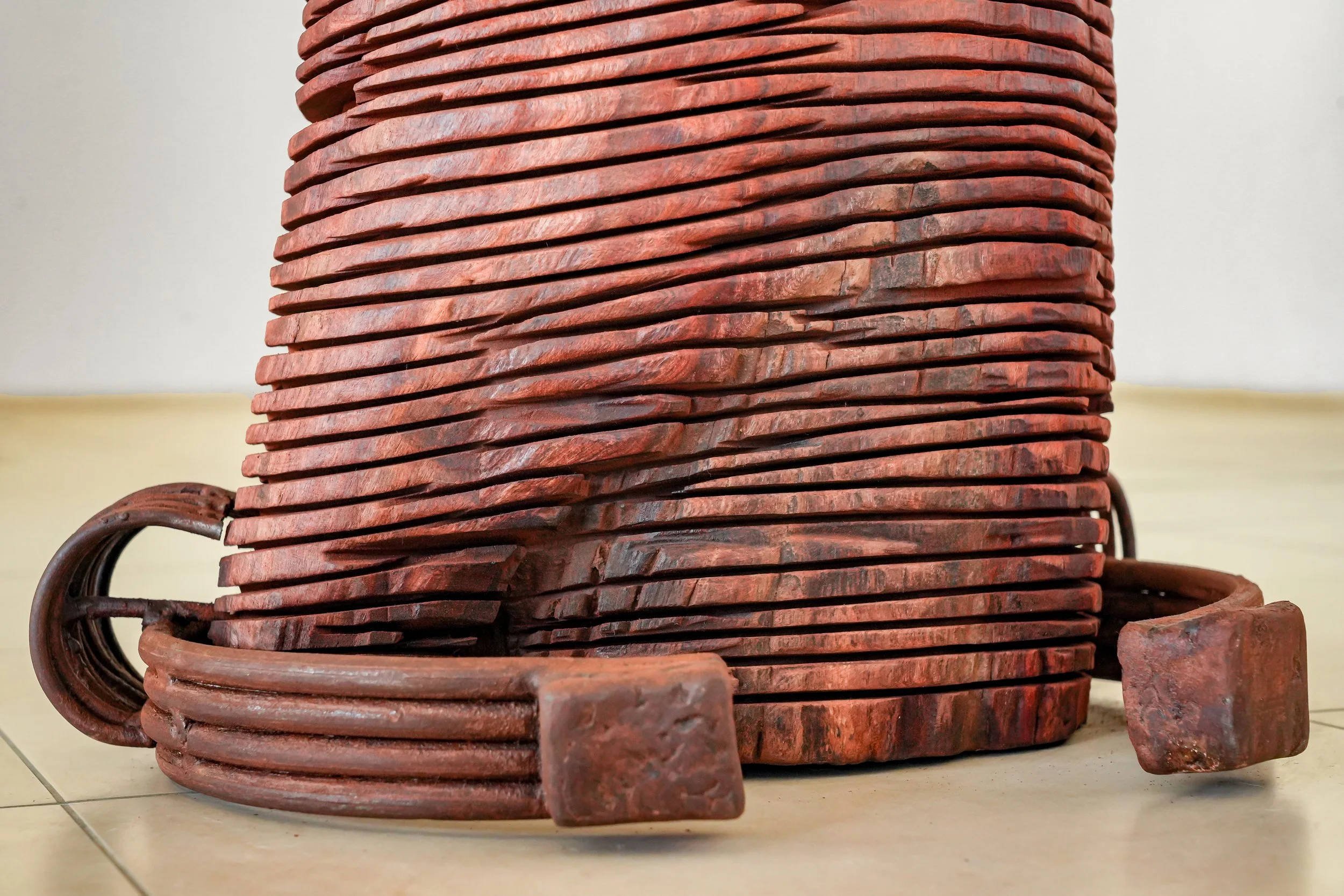
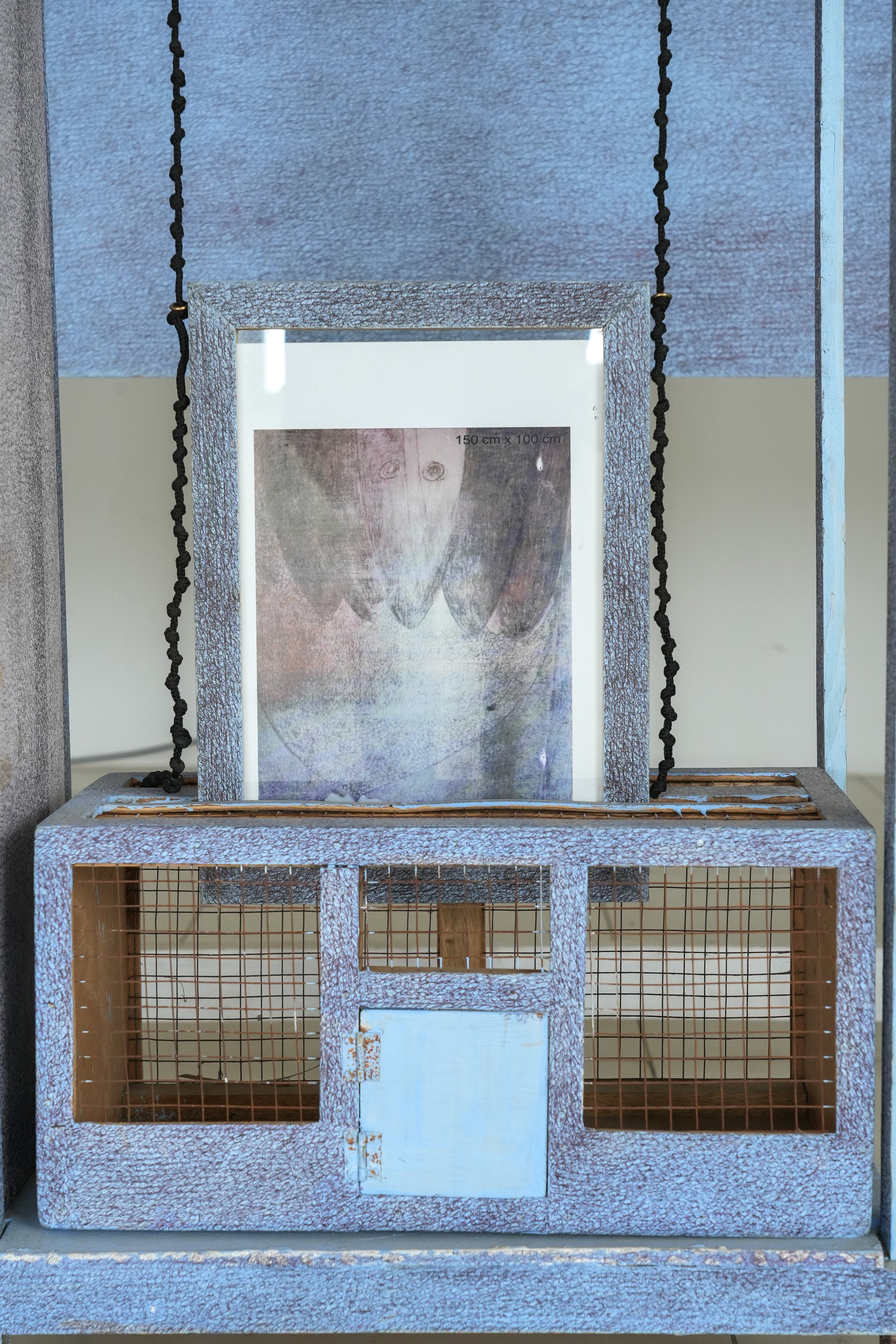
Tessi Kodjovi primarily experiments with wood and iron and is influenced by collectively shared questions such as Who are we? How do we coexist within geographical and temporal frameworks? How do we restore faith in our systems? How do we create new languages? These questions are not new; they find physical expression through the artist’s unique way of providing answers.
-
![]()
Alberto Pitta - ©Morel
-
![]()
Alberto Pitta - ©Morel
-
![]()
Alberto Pitta - ©Morel
-
![]()
Alberto Pitta - ©Morel
-
![]()
Alberto Pitta - ©Morel
-
![]()
Jelili Atiku - ©Morel
-
![]()
Ana Beatriz Almeida - ©Morel
-
![]()
Tessi Kodjovi - ©Morel
-
![]()
Tessi Kodjovi - ©Morel
-
![]()
Tessi Kodjovi - ©Morel
-
![]()
A. Sika - ©Morel
-
![]()
Yadichinma Ukoha Kalu - ©Morel
-
![]()
Serigne Mbaye Camara - ©Morel
-
![]()
Serigne Mbaye Camara - ©Morel
-
![]()
Marica Kure - ©Morel