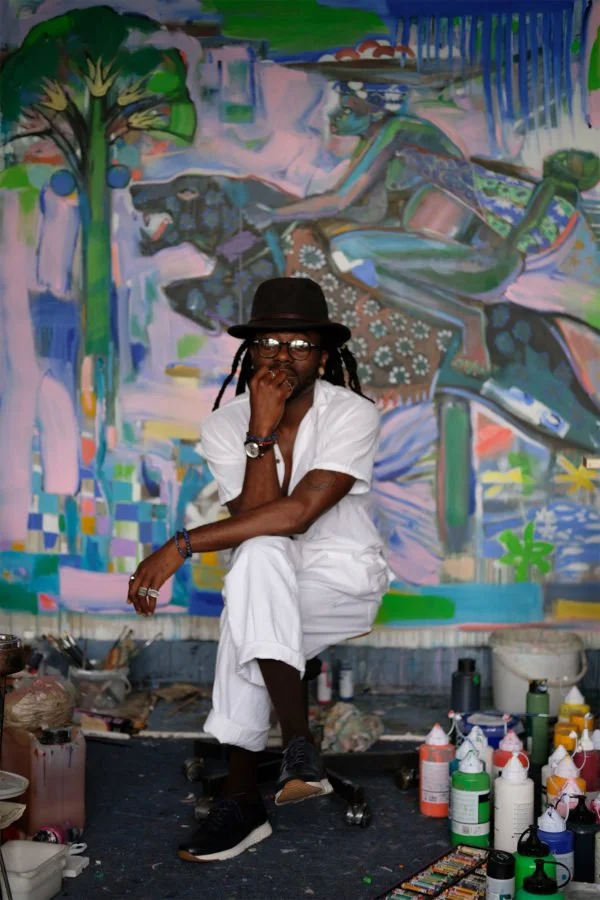
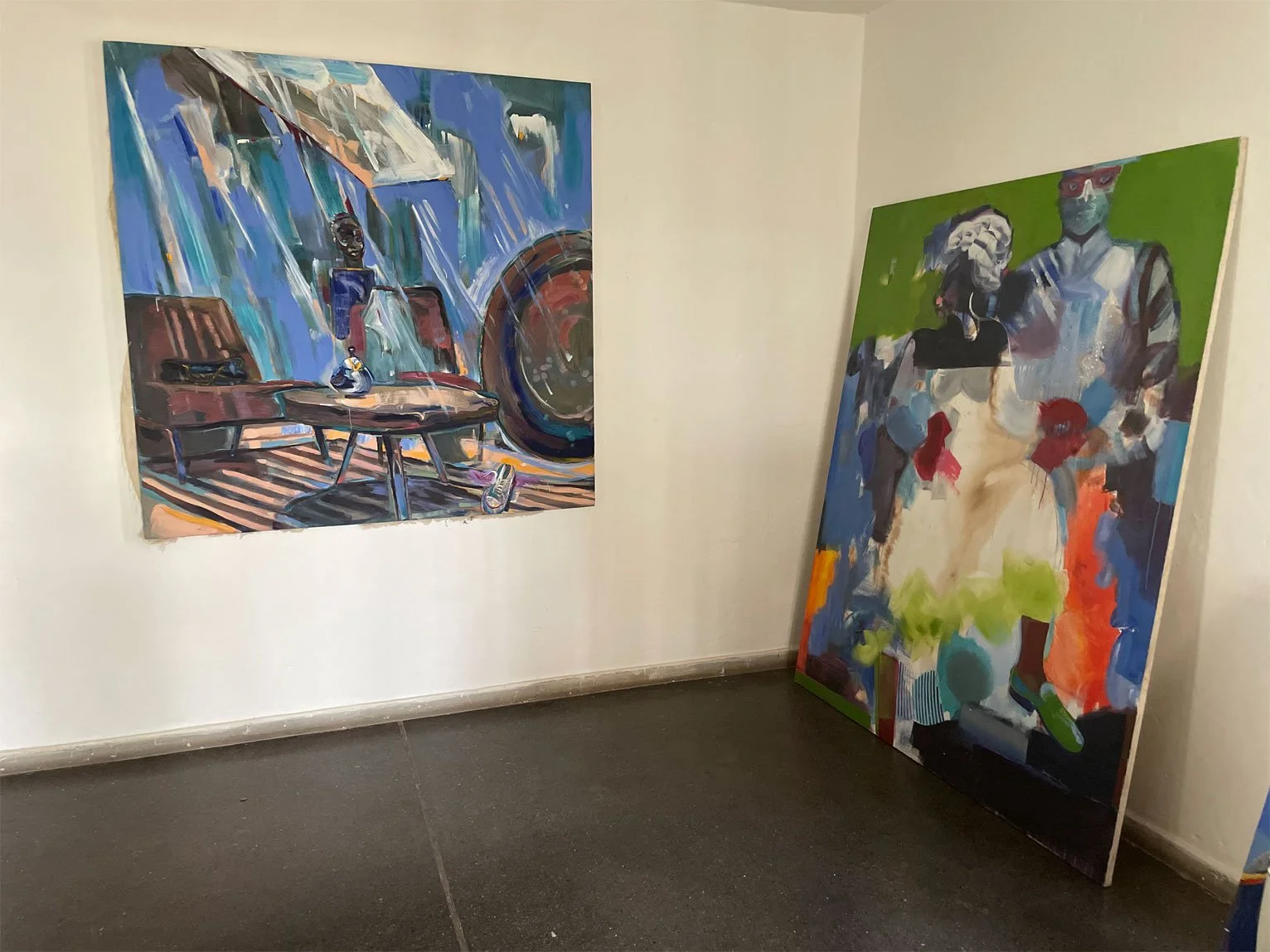
Ngimbi Bakambana Luve
Ngimbi Bakambana Luve was born in Kinshasa, Democratic Republic of Congo, in 1977. He studied at the Académie des Beaux-Arts in Kinshasa and also received musical training at the Conservatoire de Nanterre in France. He is among the first of his generation to exhibit alongside the "masters" of Congolese art, including Mavinga, the conductor of the Kinshasa City Orchestra.
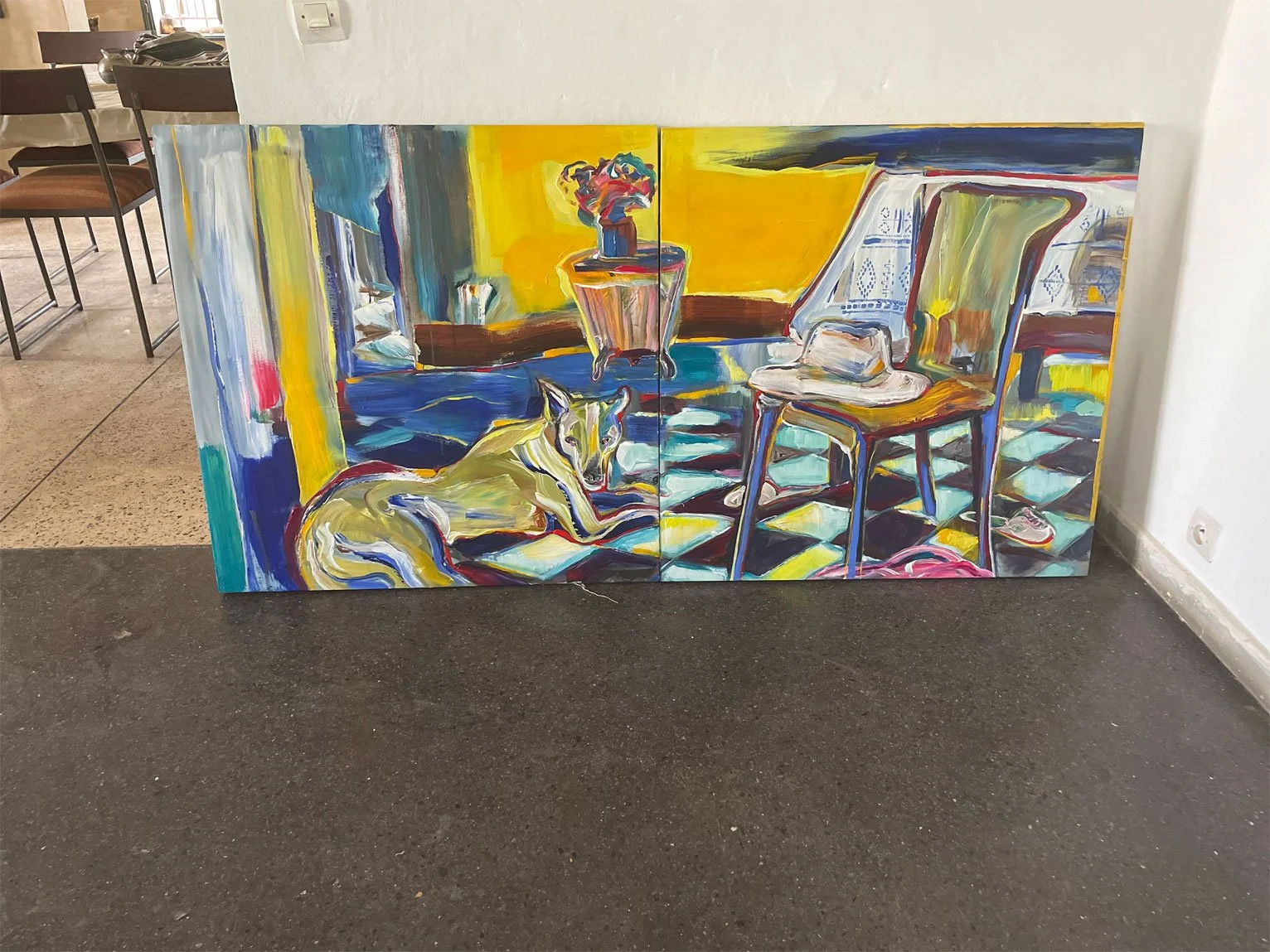
In his expressionist approach to art, Bakambana uses color as a language, conveying emotion and meaning where words fall short. Drawing from the social context of his native Congo, he articulates his reflections on the world through vibrant palettes. His paintings can be seen as a form of visual sociology, especially centered on the SAPE (Société des Ambianceurs et des Personnes Élégantes) culture that spans both Congos. Through this lens, he revisits the past.
In times of war and hardship, Sapology becomes a window into hope and joy, a self-rehabilitation through fabric and fashion, worn to be seen. It is a kind of social exorcism, marked by exuberance and flair.
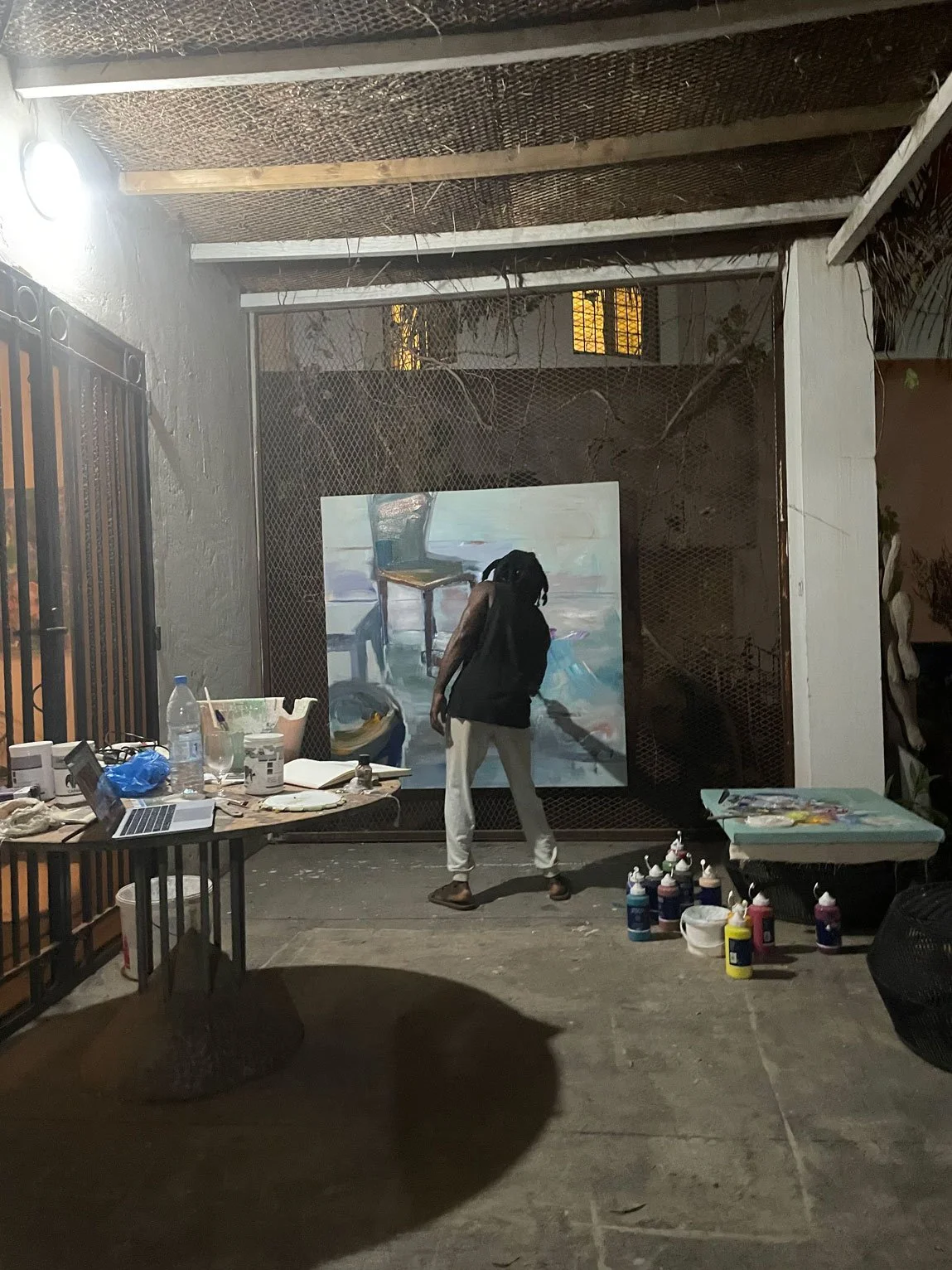
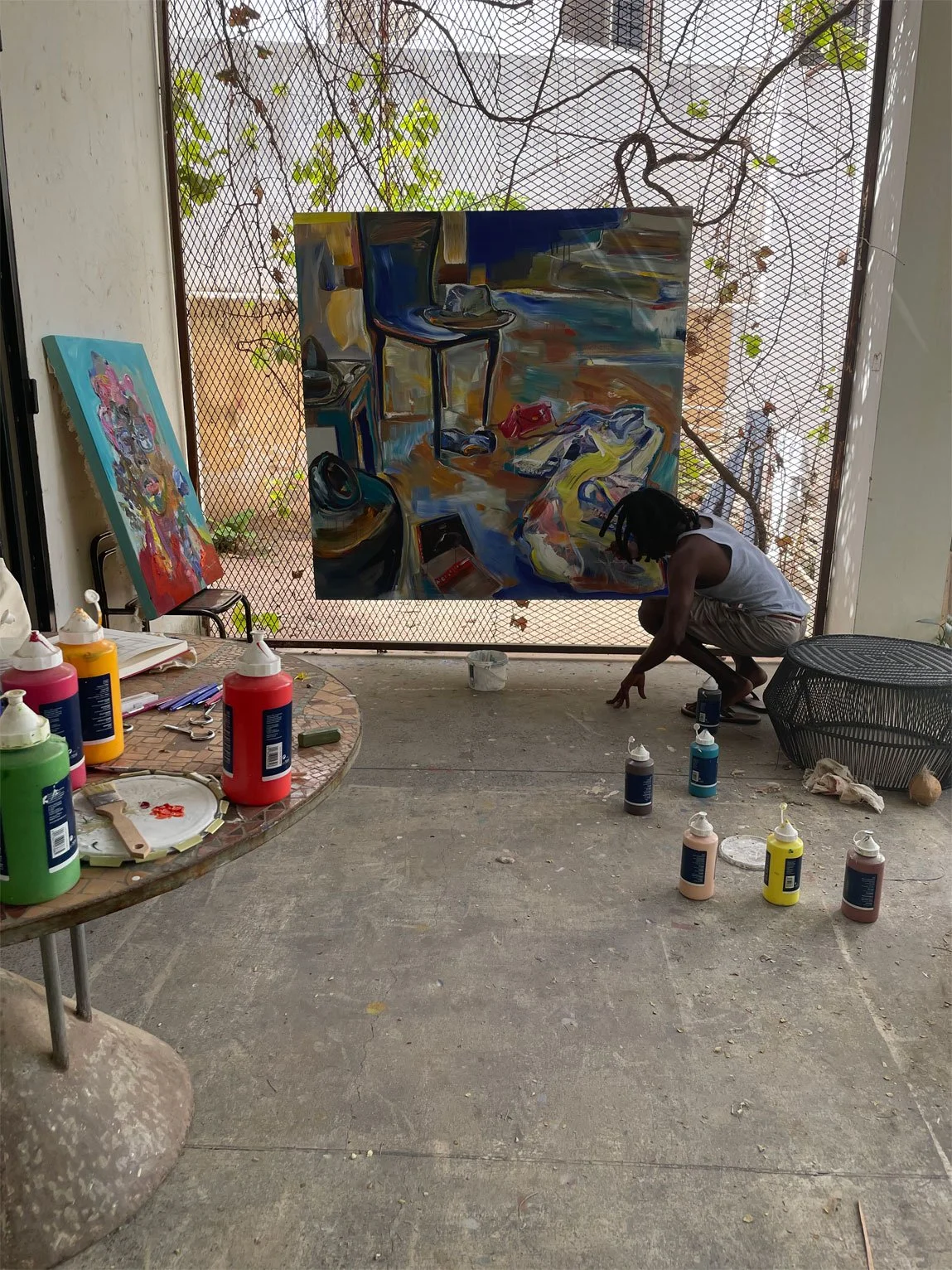
Bakambana pays close attention to line, form distortion (anamorphosis), and is a defender of Kongo art, which he regards as a spiritual art form that merges gesture with intention. He rejects boundaries between artistic disciplines, placing the body at the center of expression, with medium following temperament. For Bakambana, art is “a way to give form to an idea, regardless of medium.” In Kongo art, ethics are embedded in aesthetics. The gesture is part of the artist’s daily life, it is ritualistic, and the Nsoneki (artist) engages in a dialogue with the body.