
Ngimbi Bakambana Luve
Ngimbi Bakambana Luve was born in Kinshasa, Democratic Republic of Congo, in 1977, and studied at the Academy of Fine Arts in Kinshasa. He also received musical training at the Conservatory of Nanterre in France.
Bakambana is one of the first of his generation to have exhibited alongside masters of Congolese art, such as Mavinga, the orchestra conductor of Kinshasa. In his expressionist approach to art, Bakambana uses color to express what words convey in verbal communication. Drawing inspiration from the social context of his native Congo, he translates his thoughts and understanding of the world through color.
His paintings are a form of visual sociology focused on the culture of la SAPE, centered around the two Congos, and serve as a reflection on the past. In the difficult context of war and deprivation, sapology offers a window into hope and joy, a form of self-rehabilitation through clothing and fashion worn to be seen. It is a kind of social exorcism marked by eccentricity. Bakambana pays particular attention to line and the anamorphosis of forms, and he champions Kongo art, which he views as a spiritual practice that links gesture and intention within the artwork. He sees no boundaries between artistic disciplines. For him, the body is central to expression, and the medium depends on temperament.
According to Bakambana, art is “a way to give shape to an idea regardless of the medium. In Kongo art, it is ethics within aesthetics. Gesture is part of the artist’s daily life, it is a ritual, and the Nsoneki (artist) engages in a dialogue with the body.”
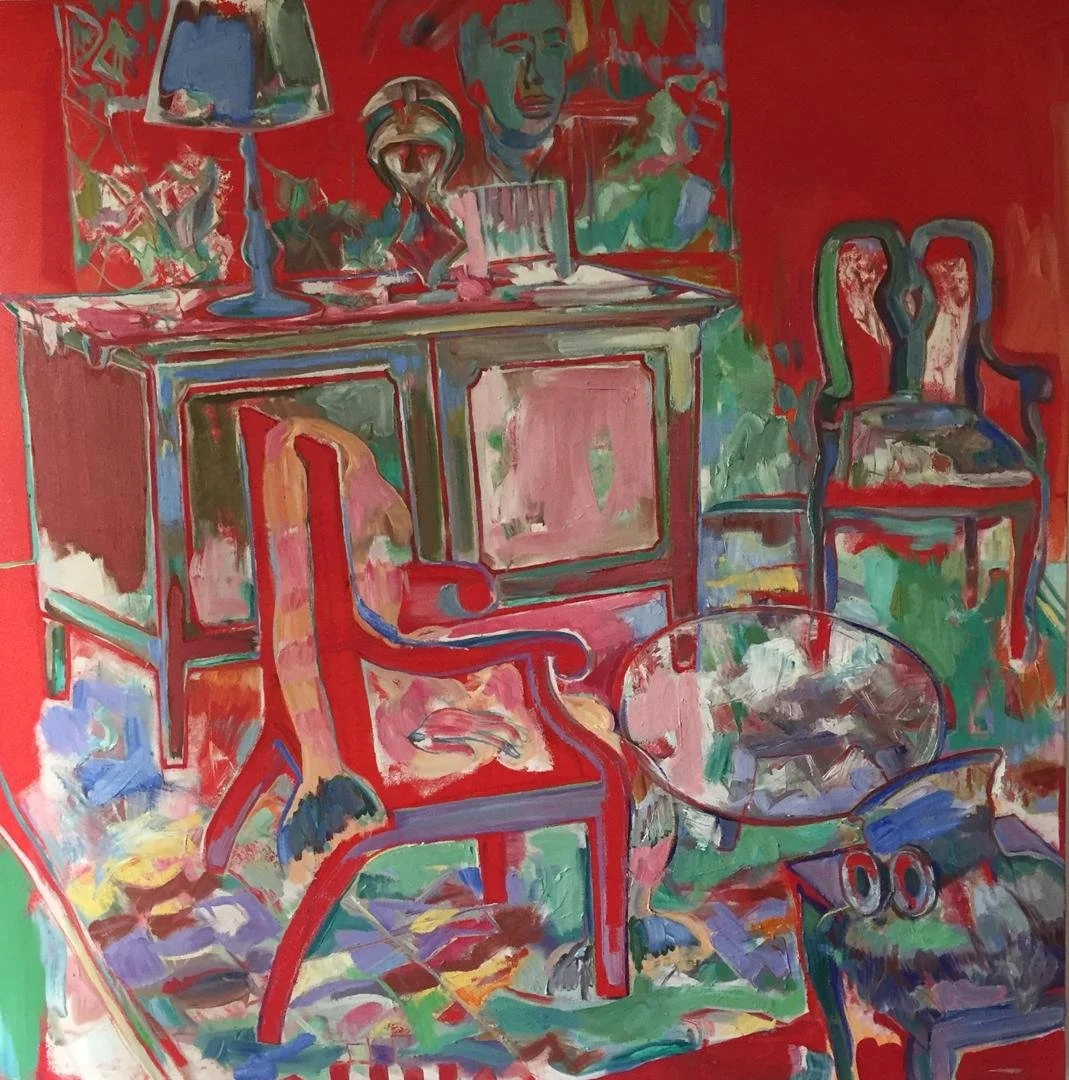
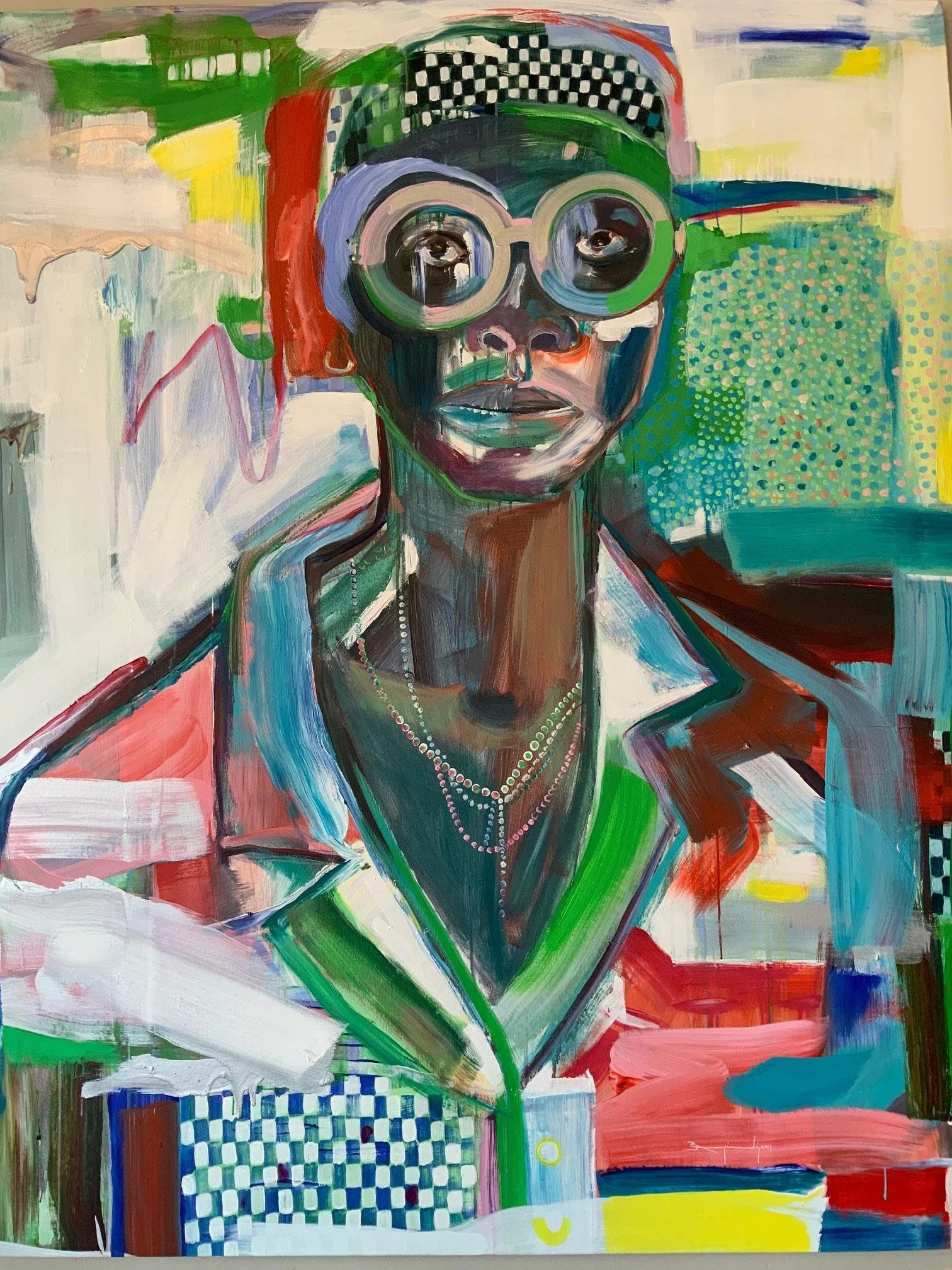
Nanga-Boko 2, 2019, Acrylic on canvas, 200 cm x 160 cm
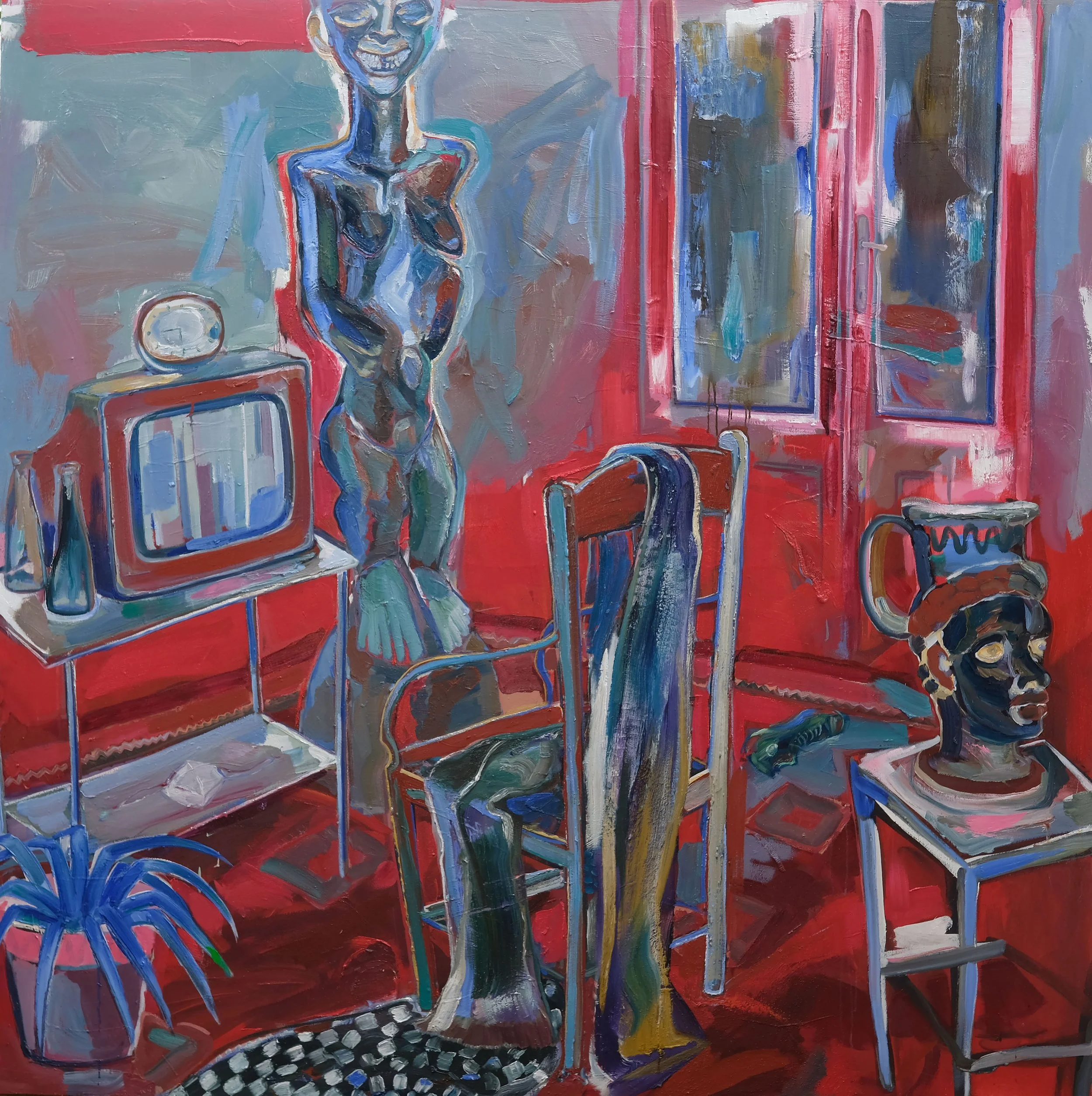
Interieur Rouge, 2024, Oil on canvas, 200cm x 200cm
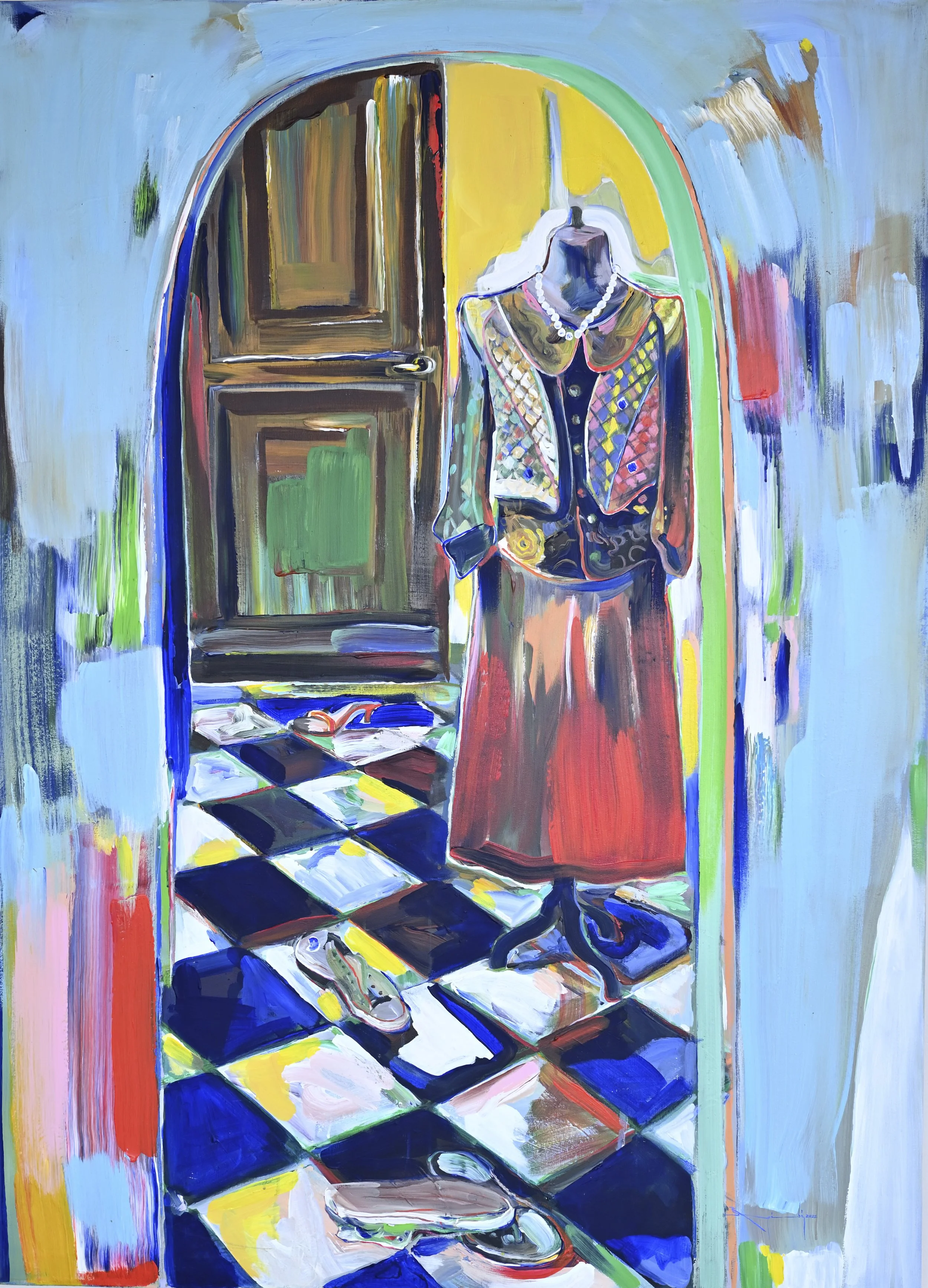
Couloir Madiakoko 2022, Acrylic on canvas, 146 cm x 114 cm