Interweaving
May 21 – August 23, 2022
Bili Bidjocka, Emmanuel Tussore, Serigne Mbaye Camara, Damien Ajavon, Mallory Lowe Mpoka, Ngimbi Bakamabana Luve, Elolo Bosoka, Moussa Traoré, Ousmane Bâ, Jean-François Boclé
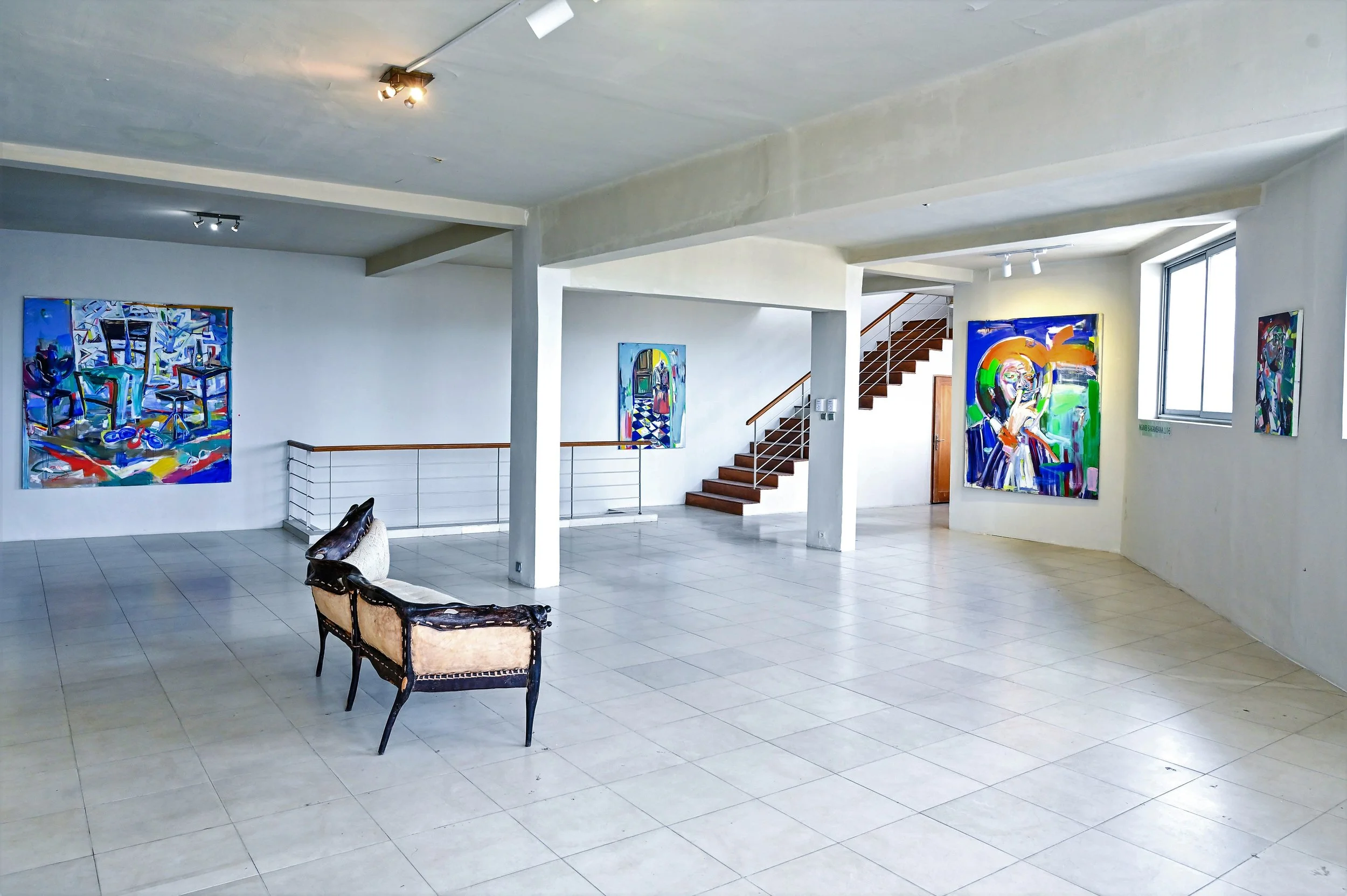
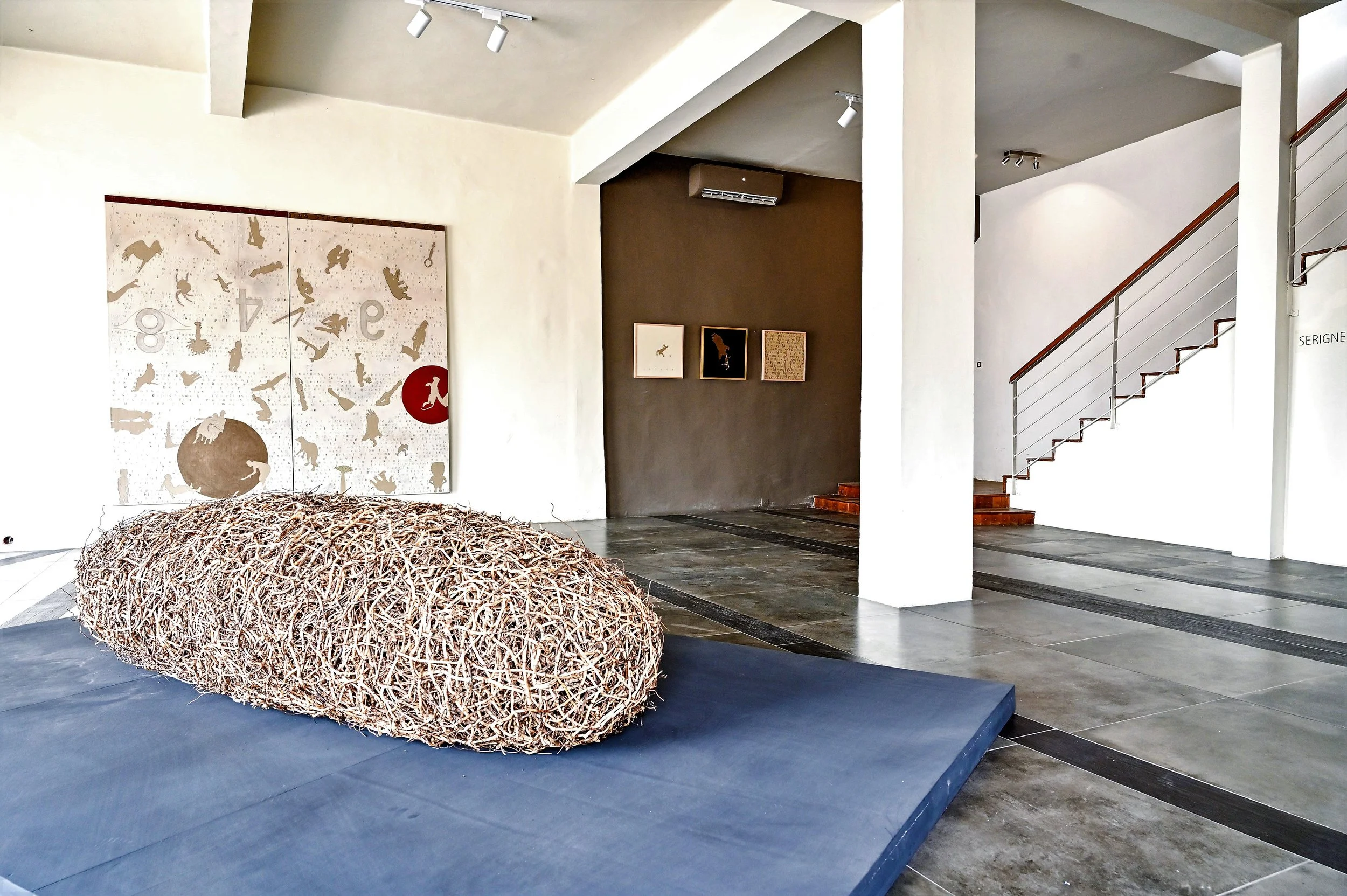
The exhibition at Galerie Atiss Dakar presents a selection of contemporary African artists with diverse and innovative practices, exploring themes of identity, memory, and cultural transformation.
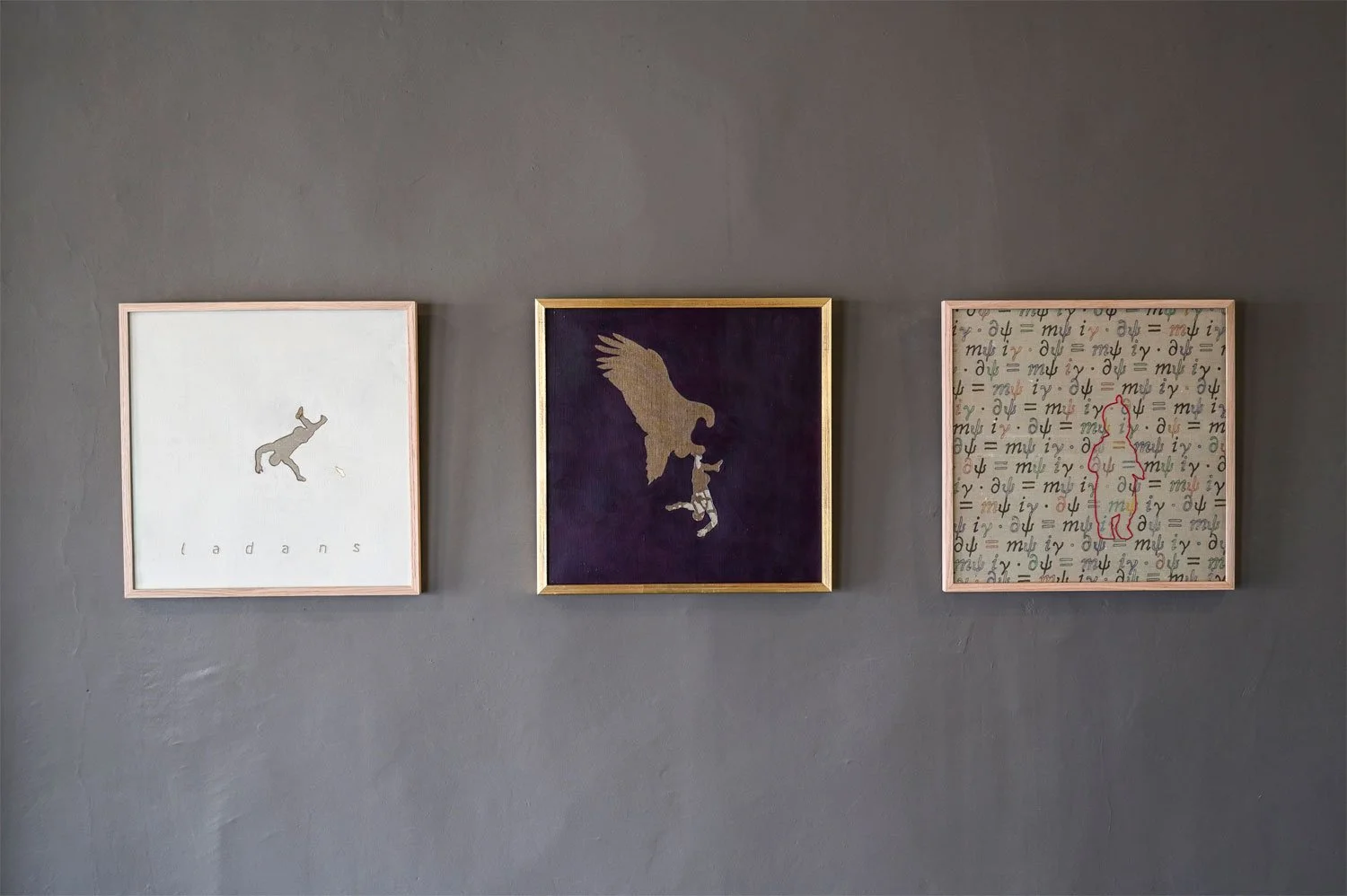
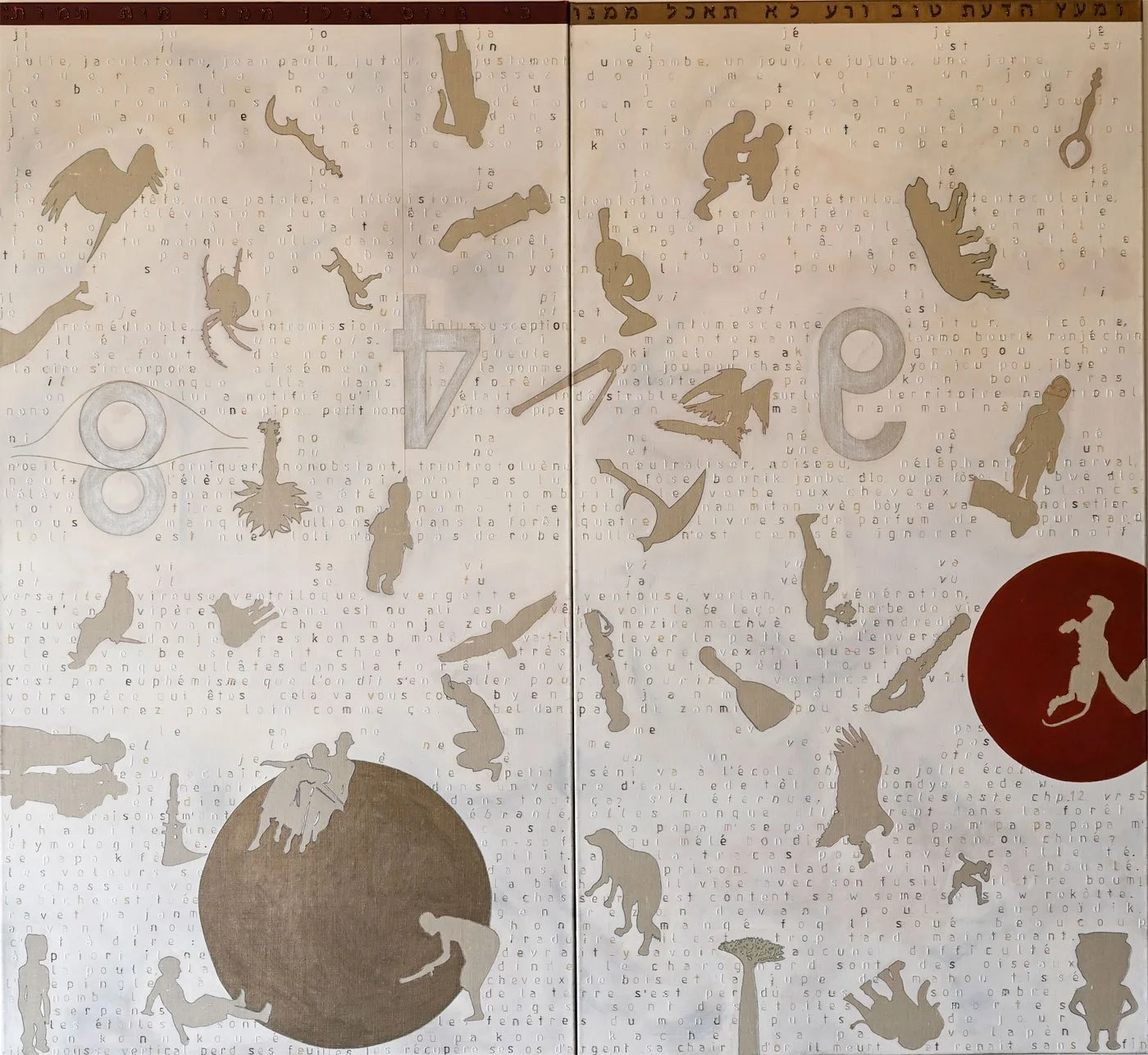
Among them, Bili Bidjocka, originally from Cameroon, invites reflection on the meaning and purpose of creation through puzzle-like works and enigmatic syllabaries. His art explores the notion of fall and the complexity of words and images, prompting us to revisit our assumptions.
Sculptor Emmanuel Tussore creates poetic and introspective pieces from sarsaparilla rhizomes, weaving a metaphor of transformation and resilience through protective cocoons.
Serigne Mbaye Camara, with his spiritual figures and large acrylic works, continues to explore heritage and identity through a constantly evolving artistic practice.
Damien Ajavon and Mallory Lowe Mpoka fuse traditional African knowledge with diasporic influences to explore cultural hybridity, particularly through textile works and indigo dyeing that embody a dialogue between Africa and Europe.
Congolese artist Ngimbi Bakambana Luve uses color as a tool of expression and dialogue, addressing the social realities of the DRC through vibrant and expressive compositions.
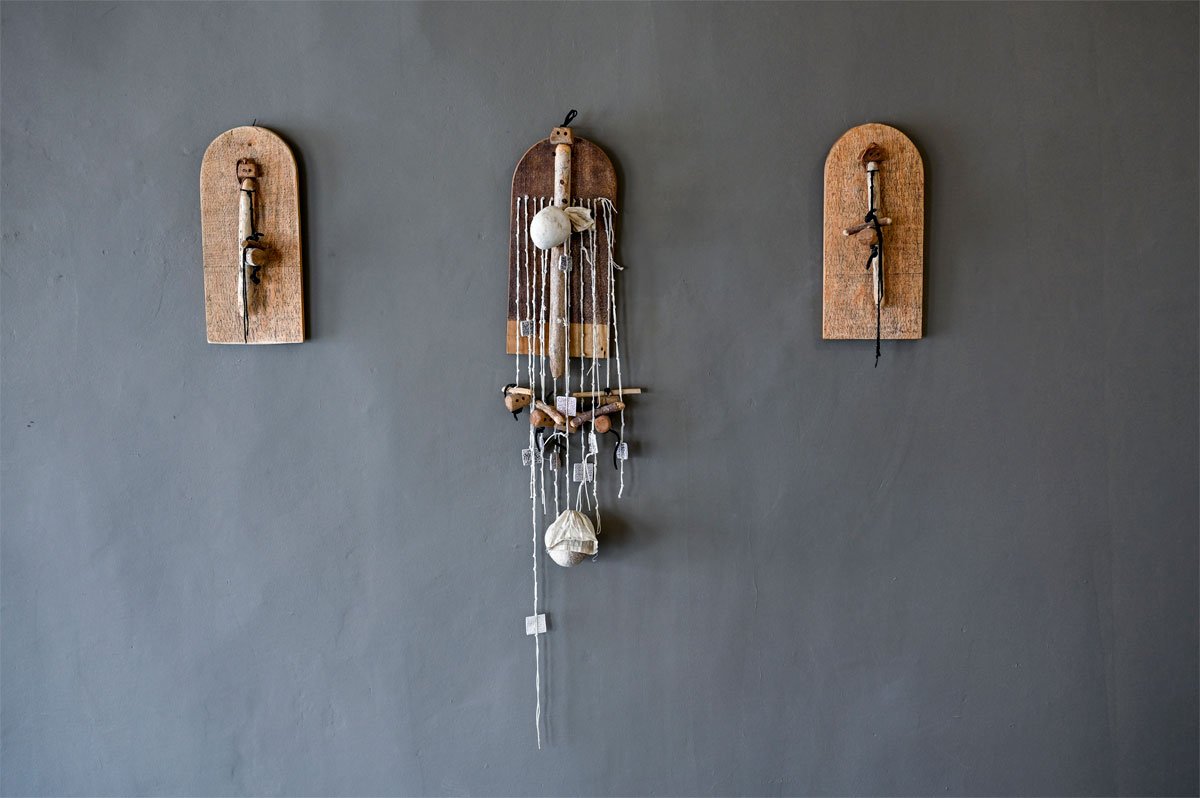
Elolo Bosoka questions the materiality of art and the transformation of everyday urban objects into contemporary artworks, with installations and sculptures that challenge both the history and function of the object.
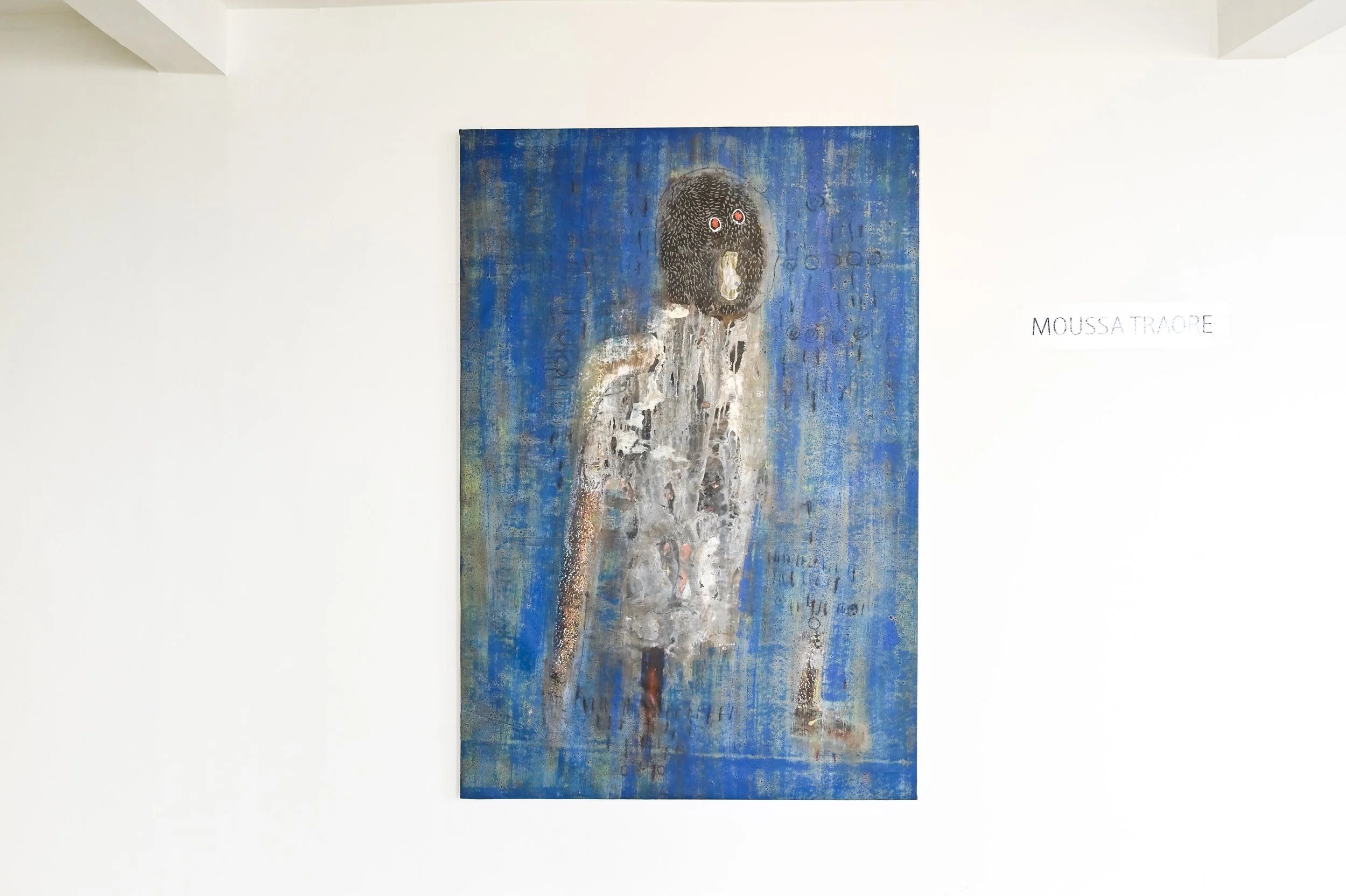
Moussa Traoré, through his exploration of bogolan and animal symbolism, creates chimeric figures that evoke a dreamlike and introspective world, tackling the complexities and dualities of human identity.
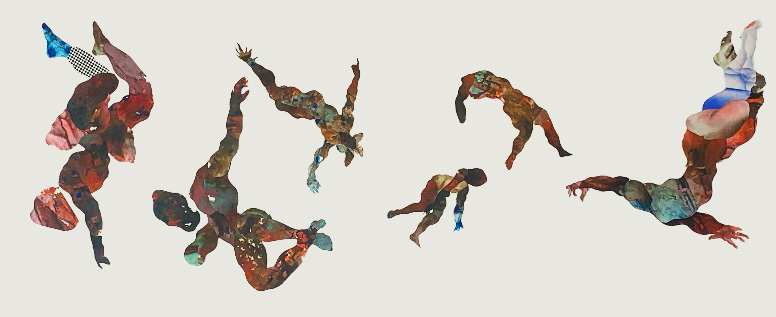
Ousmane Bâ, a Senegalese artist based in Tokyo, blends diverse cultural influences to create a new visual language that transcends borders, using Japanese mineral pigments and washi paper.
Finally, Jean-François Boclé addresses power dynamics and violence while confronting colonial history and migration through powerful, politically engaged artworks.
This exhibition highlights the diversity of contemporary African practices and offers a deep reflection on culture, history, and the future.
-
![]()
Ngimbi Bakambana Luve
-
![]()
Moussa Traoré
-
![]()
Jean-François Boclé
-
![]()
Ousmane Bâ
-
![]()
Bili Bidjocka
-
![]()
Bili Bidjocka
-
![]()
Serigne Mbay Camara